Imre Nagy Quotes
This is Imre Nagy speaking, the President of the Council of Ministers of the Hungarian People's Republic. Today at daybreak Soviet troops attacked our capital with the obvious intention of overthrowing the legal Hungarian democratic Government. Our troops are in combat. The Government is at its post. I notify the people of our country and the entire world of this fact.
Nagy was executed 2 years later by the Russian controlled Hungarian government after the revolution was put down.
Imre Nagy, 1896-1958, Hungarian Prime Minister, Radio Broadcast as the Russian Military moved to crush the Hungarian Revolution, November 1956
Sourced by: Eigen's Political and Historical Quotations

Nagy was executed 2 years later by the Russian controlled Hungarian government after the revolution was put down.


He had just assumed his post 6 days earlier. At this point he did not have enough knowledge to favor or oppose the regime change, but he did realize that the decision was a serious one and there would be no turning back. Diem was a creature of the Central Intelligence Agency. An anti-Communist Christian in a Buddhist county, the CIA engineered his rise to power, created his political party, provided him with cash to bribe other Vietnamese politicians, and paid for all the propaganda so he would “win” the Presidential elections. However, he abused the Buddhists, was thoroughly corrupt and ran a corrupt administration, but worst of all from the American point of view, he was unable to motivate the South Vietnamese population to fight the Communists. He reached the point where he was more of a liability, and the Central Intelligence Agency engineered a coup d’etat to remove him from power and replace him with a President more to our liking. (See {634540}.)

There was no national uprising. Not a single Cuban came to assist the Bay of Pigs invaders, nor was there even one sabotage action or other revolutionary action anywhere in Cuba. The conviction of the CIA that Castro was hated by the Cubans and the overwhelming majority of Cubans would welcome an invasion was so completely wrong that it was stunning. The assurances the CIA planners had received that there would be an uprising came from Cuban anti-Castro émigrés who were being paid by the CIA to organize the invasion force. They would only continue to get paid if the American authorities felt that there was a very good chance of success so they turned out to have a serious conflict of interest. But the CIA planners had been hearing this from Cuban exiles not involved with the invasion and they had a strong bias that no communist government could be a popular one. It was a great illustration of the fact that experienced professional intelligence analysts and operatives are susceptible to self-delusion and confusing wishful thinking with reality.

McNamara stated that the Cuban Missile Crisis was more politically required than defense required. The Russians had nuclear missiles at the time that could reach the United States and didn’t really need missiles in Cuba to threaten America. Public opinion and the Republican Political doctrine persuaded President Kennedy that independent of safety and military factors, nuclear missiles in Cuba was a major political problem. See his comment to the President and the Other Officials dealing with the crises—{631968}.

The Russians had lost over 20 million of its people to German WWII hostilities. They wanted a vengeance and were willing to take the casualties that came with the invasion of Berlin and many other key cities that were heavily defended. Eisenhower and Churchill realized that this would give the Russians a very dominant military occupation of Eastern Europe and Eastern Germany. However, they did not want to take the huge casualties of all these battles. Politically, Churchill and American leaders had to explain to their right wings why Russia was involved as an equal partner in making occupation decisions about Germany.

In international law, a blockade is an act of war by the brocading country against the country that is blockaded—not against 3rd parties that may have to obey the blockade. For example before the War of 1812, France and England were at war and each blockaded the other’s ports. The United States was affected by the blockade in that our ships could not go in or out of blockaded ports with goods. However nether country was at war with us. All neutral nations must respect a blockade or the blockading nation is entitled to use force to enforce the blockade, but that is not an act of war. In 2011, Gaza was at war with Israel, and Israel blockaded Gaza. A Turkish ship tried to bring goods to Gaza and Israel seized the ship by force and brought it into a near natural port (Egypt). Israel was entitled to enforce its Gaza blockade, but they were not at war with Turkey. However if Israel, blockaded a country where there was not an existing war, the blockade itself would be an act of war.


There were more than 100 million of his gun distributed over the world and his invention has been the instrument by which more people have been killed than any other weapon.

See {637982} for one of the major reasons.


With a professionalized all volunteer military, most of whom came from just a few socio-economic strata of our society, wars at the time were fought and the risks and burdens borne by a small part of American society. The rest of society, unlike the Second World War did not experience any change in their style or standard of living.

1st Viscount Grey of Fallodon. The pace of change in the world has been accelerating ever since the enlightenment. Even at the beginning of the 20th century to was making politics difficult and be the end of the century the pace of change was many times faster.

This quotation is important for two reasons. First, it shows that there was a very hostile environment in Europe well before the assassination of the Archduke of Austria that “triggered” WWI. Second, that the Germans were racist before Hitler ever came on the scene. The Emperor demagogued the issue and took it to new extremes, but the evil was there. To the Germans, the Slavs and Russians were a lesser form of humanity than the Germans. The Austrians were threatening to attack Serbia and Russia. The Austro-Hungarian Empire, ruled many ethnic Slavs, Russians and Muslims—the lower forms of humanity—and long before Hitler, Wilhelm and other leading Germans thought that the Germanic Peoples should rule that part of the world as the lesser “races” were not fit to rule.


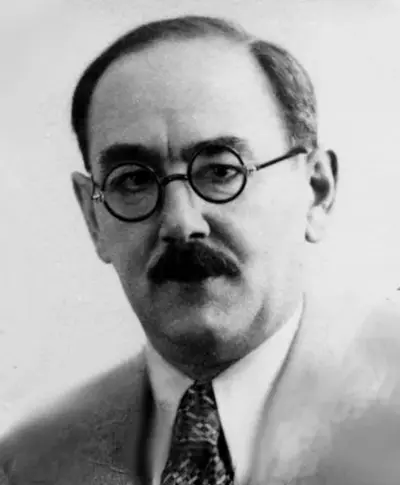
Imre Nagy was a Hungarian communist politician who served as Prime Minister and Chairman of the Council of Ministers of the Hungarian People's Republic from 1953 to 1955. In 1956 Nagy became leader of the Hungarian Revolution of 1956 against the Soviet-backed government, for which he was sentenced to death and executed two years later.
