Imre Nagy Quotes
This fight is the fight for freedom by the Hungarian people against the Russian intervention, and it is possible that I shall only be able to stay at my post for one or two hours. The whole world will see how the Russian armed forces, contrary to all treaties and conventions, are crushing the resistance of the Hungarian people.
Nagy was executed 2 years later by the Russian controlled Hungarian government after the revolution was put down.
Imre Nagy, 1896-1958, Hungarian Prime Minister, Statement when the Russian Troops Began to Put Down the Hungarian Revolution, November 1956
Sourced by: Eigen's Political and Historical Quotations


Nagy was executed 2 years later by the Russian controlled Hungarian government after the revolution was put down.


Like many in the 1920s, Dewar saw the Communist Soviet Union as the biggest potential risk to peace. However, although the Russian leaders constantly castigated the West, they did not have a large military, and were for the most part highly anti-war as they saw war as the product of Capitalistic competition and the tool of the aristocracy. They had little military equipment and almost no training or officer corps with which to build any Army. Germany in contrast had the skill, experience, officers, a history of aggression, and huge resentment over what they considered their humiliating WWI defeat and peace terms. They would start WWII, not Russia.

Shortly after he refused to join, his brother who had joined the Resistance had been captured, tortured and murdered by the Germans. He then joined the active resistance even though the Americans had not yet arrived. He realized that resistance was just an annoyance to the Germans, and the time the Resistance could really make a difference was after the Americans and British had landed in France.

This statement became known as "The Truman Doctrine." Truman asked for $400 million to help Greece and Turkey fight stave off armed Communist minorities destabilizing their governments.


Mobutu with Amerucan CIA and French assistance deposed Lumumba, murdered him, and seized power.

The same sentiment has been attributed to Aristotle.

The Justice Department and the White House were arguing that the Geneva Conventions did not apply to terrorist groups. See {589865}.

This statement later became known as “The Truman Doctrine.”


Graham was a very strong advocate for democracies. However, many politicians advocated staying out of that struggle. They pointed out that Graham was very inconsistent. He opposed the U. S. taking sides in most of the other struggles between democracies and dictatorships such as in Saudi Arabia, Arab Emirates, Kuwait and the dictatorships of Azerbaijan, Zimbabwe, and Burma among others. Graham was a strong anti-Russian and supported countries who were against Russia or with whom Russia was at odds.
The Boers had just a few years before lost their war with the British who were then in control of South Africa. However, the British did not treat the Boers harshly in defeat and most Boers were at the time farmers and land owners who were a major force in democratic South Africa and had much invested in the nation. Others were still resentful of the British. The Boers sided with the British and fought the Germans who had troops and colonies in Africa. Like the Irish, culturally, they were always up for a good fight.

This quotation is important for two reasons. First, it shows that there was a very hostile environment in Europe well before the assassination of the Archduke of Austria that “triggered” WWI. Second, that the Germans were racist before Hitler ever came on the scene. The Emperor demagogued the issue and took it to new extremes, but the evil was there. To the Germans, the Slavs and Russians were a lesser form of humanity than the Germans. The Austrians were threatening to attack Serbia and Russia. The Austro-Hungarian Empire, ruled many ethnic Slavs, Russians and Muslims—the lower forms of humanity—and long before Hitler, Wilhelm and other leading Germans thought that the Germanic Peoples should rule that part of the world as the lesser “races” were not fit to rule.

When the United Nations partitioned Palestine into separate Jewish and Muslim states, the armies of all the Arab countries attacked the new nation which did not even have a formal Army. The Israelis were able to win the war.
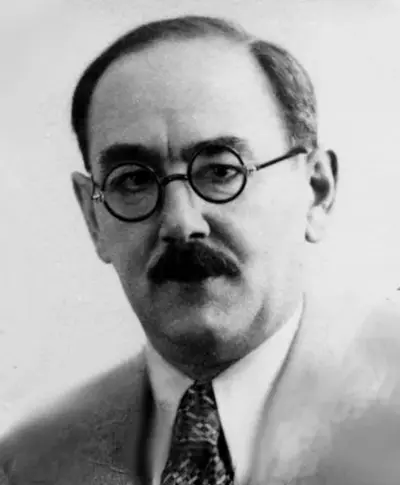
Imre Nagy was a Hungarian communist politician who served as Prime Minister and Chairman of the Council of Ministers of the Hungarian People's Republic from 1953 to 1955. In 1956 Nagy became leader of the Hungarian Revolution of 1956 against the Soviet-backed government, for which he was sentenced to death and executed two years later.
