Bruce Sterling Quotes
They used to be seen as insane or unthinkable acts of madmen. But if they take place they'll be called 'war' too. And there will still be no conventional war.
Sterling, Bruce. "Bruce Sterling Answers Your Questions." Slashdot, 20 Oct. 2004.


Defending torture and other violations of civil rights by the Secret Service during the Civil War:


The meaning is that to be victorious in war one should not be inhibited from doing cruel and brutal things that war sometimes necessitates.

At the time of this speech virtually the entire world believed that. However world attitude changed markedly after the administration of George W. Bush and the United States invasion of Afghanistan after September 11 and the Iraq War which was for regime change.

At the time the President denied that he had decided to invade Iraq. Skelton saw the “handwriting on the world.”


President Lincoln and Several of the Commanding Union Generals had declared that black slaves were free during the midst of the Civil War under the legal theory that if the slaves were property of the rebels, then they cold be seized as “contraband” and removed from the control of those who had committed treason. The question was, what would happen to those now free Negroes after the war? Many Negro leaders were anxious that if there were surrender, then the status quo ante might prevail and the Negroes—many have who had fought for the Union might be returned to slavery. This speech by the Secretary of State alarmed them further. This is why the Emancipation Proclamation was so important and even that might have been overturned by a subsequent President. This is why Lincoln, the white radical Republicans and the Black leadership placed so much emphasis on passing the 13th Amendment.

With a professionalized all volunteer military, most of whom came from just a few socio-economic strata of our society, wars at the time were fought and the risks and burdens borne by a small part of American society. The rest of society, unlike the Second World War did not experience any change in their style or standard of living.


14 years after this statesmanlike speech, Davis flip flopped on this principle and became a firebrand and agitator and hawk for secession and war. It was the Southern upper class that controlled the politics of the South and were the ones who would suffer the greatest economic loss if the Union had continued in the direction of refusing to return runaway slaves and other abolitionist activity. Although many Southerners volunteered to fight for the confederacy, there were not enough and Davis, who in earlier years would not war unless there was genuine demand of the people, for the Civil War, the South had to resort to conscription. The North did as well.


King George did not want to give up the American Colonies and claimed the loss at Yorktown was just a loss of a single battle. The English soldiers had controlled New York, Charlestown and other places and American Tories wanted to fighting to continue. The French were having major problems elsewhere and the states were all broke from the war effort. Hamilton urged Clinton to offer all the New York offers and soldiers half pay tp be available to fight against the other ex-colonies represented in the Continental Congress.
“Amir” was the Arabic term for the commanding general or admiral. This is an important quotation as it shows that the ethics of war for the Muslims allowed guerilla warfare and formal pitched battles. Most Christians looked down upon guerilla warfare at the time.

General Grant had the fort surrounded and the confederate general hoped to surrender the fort and allow him and his men to leave to fight again some other day. This was often agreed to so the military objective would be gained without the casualties of a battle. However, Grant and Lincoln did not simply want to gain forts and territory. They wanted to end the war. Those Confederates who survived the battle were taken prisoner and were out of the fight.
The line was delivered by Dustin Hoffman.

He himself became a victim of the Civil War when Oliver Cromwell ordered him beheaded in 1658
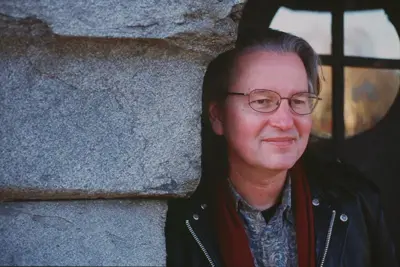
Michael Bruce Sterling is an American science fiction author known for his novels and short fiction and editorship of the Mirrorshades anthology. Sterling's first science fiction story, Man-Made Self, was sold in 1976. He is the author of science fiction novels including Schismatrix (1985), Islands In The Net (1988), and Heavy Weather (1994). In 1992, he published his first nonfiction book, The Hacker Crackdown: Law And Disorder On The Electronic Frontier.
