Andrew Jackson Quotes
These tribes cannot exist surrounded by our settlements and continual contact with our citizens. They have neither the intelligence, the industry, the moral habits, nor the desire of improvement. They must necessarily yield to the force of circumstance and, ere long, disappear.
Andrew Jackson, 1767-1845, 7th President of the United States (Democrat, TN), Justification of the Indian Removal Act of 1830
Sourced by: Eigen's Political and Historical Quotations

Carson was one of the few Indian Agents who spent every penny of his budget on the Indians as opposed to himself. He was married to an Indian woman and was close enough to many Indians that he understood their resentment whenever they came into a town. They were treated terribly and while most of them were literally starving, seeing the white opulence produced resentment.


President Jackson was the most extreme President in terms of abuse of Native American Rights. His racist views and policies were a large reason for the continuing problems that Indians have had gaining fair treatment and equality. Jackson was the only American President who ever refused to obey a Supreme Court decision when he removed the Cherokee Indians from their lands, despite the fact that the Supreme Court had ruled that such a removal was illegal. See {623405} for other Jackson views on Indian policy.


Wayne played so many parts depicting whites in the process of expanding Westward that many people saw him as an expert on the history of the Westward Expansion. He did not comment on the whites who then kept huge ranches “selfishly” for themselves or those who selfishly would not share the mineral rich land that they had taken with anyone including the original Indian owners. So in this view, the Indians should have not been capitalists but they should have been socialists and shared their resources.

See {633119} for the basic provision of the Dawes Act.

The first Native American to become a General Officer. Appointed by President Grant in 1869


First Indian newspaper in the U.S.

First Indian to hold the position
Published 100 years after it was written. This is the first known written statement of what became a de facto policy regarding the American Indian.


He was a brutal officer who by modern standards committed various war crimes.


The White Africaners were attacking the Blacks to force them off their land so the Afrkaners could take over. The country was under British rule and the unarmed Blacks were being slaughtered by the Afrikaners who were British Subjects. Eventually the Boer War set the English against the Afrikaners. See {583902} for a related quotation.
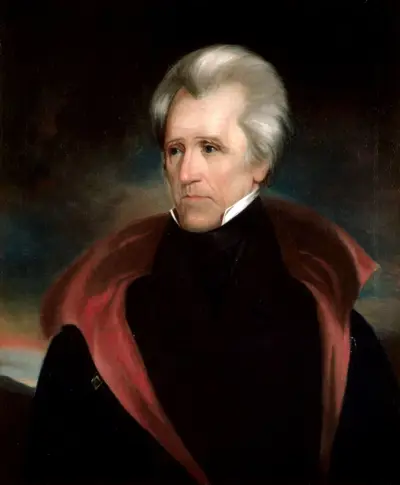
Andrew Jackson was an American lawyer, soldier, and statesman who served as the seventh president of the United States from 1829 to 1837. Before being elected to the presidency, Jackson gained fame as a general in the United States Army and served in both houses of the U.S. Congress. An expansionist president, Jackson sought to advance the rights of the "common man" against a "corrupt aristocracy" and to preserve the Union.
