Theodore Roosevelt Quotes
There is no longer any such brutal and flagrant assessing of government employees in the federal service as was customary ten years ago. There is not nearly so much as there is in the local, state, and municipal service
“Assessing” did not mean evaluating. It described a process where each civil servamt was “assessed” an amount of money—based on his salary—that was to be paid to the Political Party that appointed him. The specific corrupt process of “assessing” he described well in {629355}. Roosevelt had worked at the local, state and Federal levels of government. All had tolerated a great deal of this form of corruption. At the time this article was written, the Federal reforms had begun to take effect. Some states and local governments followed, but the average level of corruption being most at the local level, next at the state level, and least at the Federal level, as TR observed then was essentially the same into the 21st century. Government corruption was generally less, but relatively it was worst at the local level and least at the Federal level. At the end of the 20th century for example, every Kentucky County Commissioner except 1 was convicted and jailed for taking bribes and kickbacks from highway and road construction contractors. Corruption at the Federal Level was less.
Theodore Roosevelt, 1858-1919, 26th President of the United States (Republican, NY), “Political Assessments in the Coming Campaign”, The Atlantic Monthly, July 1882
Sourced by: Eigen's Political and Historical Quotations

“Assessing” did not mean evaluating. It described a process where each civil servant was “assessed” an amount of money—based on his salary—that was to be paid to the Political Party that appointed him. This historical quotation gives us a feel for the common political practice of 19th century. In the 21st century, this practice looked unethical and corrupt. Consider that Americans of the 22nd century will likely view private campaign contributions as corrupt. Standards have improved over time in America.

At the time, Civil Service jobs were all appointed and the government employees could be fired at will regardless of whether the did their jobs well or not. The President and the Cabinet members spent huge amounts of time dealing with people looking for appointments (“place”)
and hearing complaints from civil servants who had been fired unjustly. Two years later, Congress passed the legislation. See 1.
We shall have a system where When Roosevelt became Police Commissioner, virtually every appointment, promotion, and disciplinary action was controlled politically. Nothing could be more shocking to the police and the politicians than Roosevelt’s statement. But he implemented that policy and the result developed into the finest urban police department in the country. The political influence however returned a few decades later.


He was executed for rebellion at age 29. However, a number of his followers went on to leadership positions in the reforms that followed.


The new director was faced with 2,600 personnel vacancies in this critical office and the jobs were not getting filled quickly. Many people who are appointed to high Federal Office and come from the private sector or state and local government, are appalled at the extensive and cumbersome bureaucracy that makes the hiring of Federal employees so tedious and slow.


The first non-PRI President in over 70 years. Before Fox, the corruption of Mexican Presidents was rampant.


In addition, most state and local corrupt officials are detected, and prosecuted by Federal law enforcement officials as local and sometimes state corruption involves the local and state law enforcement officials as well as others so local authorities often turn a blind eye towards corruption.

Whitman himself had worked as a clerk in 3 different Federal Departments.
The Iroquois were among the most sophisticated of the North American Indian Tribes. They also were highly assimilated into the American society. In the next decades, they would switch their political position when New York State provided better legal guarantees for Iroquois land than the Federal Government. By the end of the 20th Century, led by the Iroquois, the Indian residents of New York State had the same level of earnings as the white man—and that was with NO INDIAN GAMING.
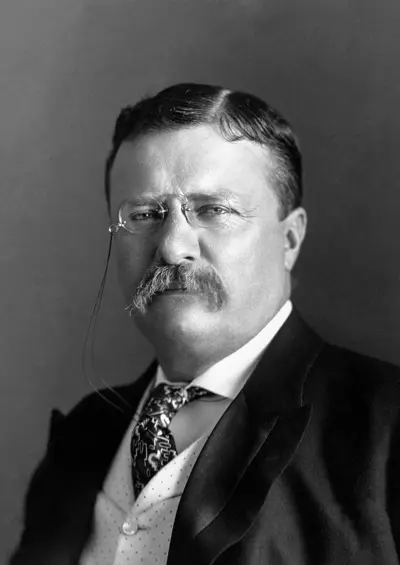
- Born: October 27, 1858
- Died: January 6, 1919
- Nationality: American
- Profession: Nobel Peace Prize
Theodore Roosevelt Jr., often referred to as Teddy or his initials T. R., was an American statesman, conservationist, naturalist, historian, and writer, who served as the 26th president of the United States from 1901 to 1909. He previously served as 33rd governor of New York from 1899 to 1900 and the 25th vice president of the United States from March to September 1901. Roosevelt emerged as a leader of the Republican Party and became a driving force for anti-trust and Progressive policies.
