Giuseppe Mazzini Quotes
The vital question in agitation at the present day is a question of Education. We do not seek to establish a new order of things through violence. Any order of things established through violence, even though itself superior to the old, is still a tyranny. What we have to do is to propose, for the approval of the nation, an order of things which we believe to be superior to that now existing, and to educate men by every possible means to develop it and act in accordance with it.
Giuseppe Mazzini, 1805-1872, Italian statesman, An Essay On the Duties of Man Addressed to Workingmen, 1844
Sourced by: Eigen's Political and Historical Quotations


There had been a revolution against the Qing Dynasty and an attempt to establish a republic. Wang, the spokesperson, quickly wrote an article in the Atlantic Monthly one of the most prestigious American publications. He minimized the degree of bloodshed, but by Chinese standards of civil unrest where over 20 million people had been killed in previous discords, this was relatively benign. It was a de facto military coup which also involved political assassinations which he carefully avoided mentioning, and just a few months after the publication of this article a second revolution broke out and this version of the Chinese Republic was very short lived.


Tragically, the world paid a terrible price for the German upheaval before the better world finally emerged.

Ataturk as part of his radical reforms elevated secular teachers to a very high social status and moved science and engineering into the curriculum over the objections of traditionalists and Islamic fundamentalists, and he did this in an overwhelmingly Muslim country.


Traditional Islamic education of the time only dealt with the Koran but the skills of modern life, medicine, law, science were taught in the British secular schools, which Muslims generally would not attend. Kahn urged all is fellow Muslims to benefit from all forms of education.


the soldiers of King George The early American Revolutionary Army was not led by many competent seniors officers. Many of the general officers were such by virtue of socio-economic class rather than talent or merit. Rush ran the hospitals for the Revolutionary and talked to many officers and enlisted men, and also observed much of the British military practices.


This quotation from the great educator is frequently used in the argument over testing in schools which measure in large part the transmission of knowledge. This was especially true in the “No Child Left Behind Program of the George W. Bush Administration.


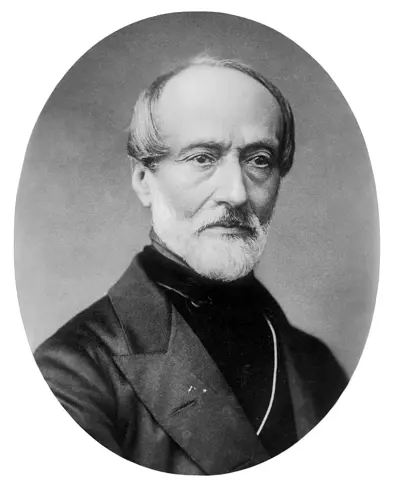
Giuseppe Mazzini was an Italian politician, journalist, activist for the unification of Italy and spearhead of the Italian revolutionary movement. His efforts helped bring about the independent and unified Italy in place of the several separate states, many dominated by foreign powers, that existed until the 19th century. An Italian nationalist in the historical radical tradition and a proponent of social-democratic republicanism, Mazzini helped define the modern European movement for popular democracy in a republican state.
