James Buchanan Quotes
The squandering of the public money sinks into comparative insignificance as a temptation to corruption when compared with the squandering of the public lands.
James Buchanan, 1791-1868, 15th President of the United States (Democrat, PA), Inaugural Address, Washington DC, March 4, 1857
Sourced by: Eigen's Political and Historical Quotations


He had not committed any felonies, but these charges were laid under the concept of “high crimes and misdemeanors”.


The United States had just ousted the popularly elected leader Patrice Lumumba {640611}, and backed Mobuto. Lumumba was an idealist who was not corrupt at all, but were not so sure about our new protégé. Sadly he turned out to be one of the worst kleptocrats of all time, and he stole with more United States money than we gave to many nations in toto. Many believe that one of the reasons, corruption of our “allied” leaders was so bad lies in the wording of this cable. Note that to the State Department writers there was “normal” corruption as opposed to excessive corruption. Once that view is taken there is a constant battle to determine whether each new act of corruption is “normal “ or not, and corruption is simply lessened by pushing back against the most abnormal schemes. These critics advocate a zero tolerance for corruption especially with United States AID money. The State Department has been ambivalent and have often used the corruption system to bribe leaders to obtain national objectives.

1st Earl of Beaconsfield


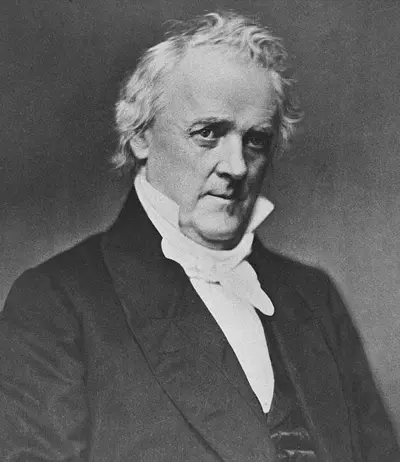
James Buchanan, Jr. was the 15th President of the United States (1857–61), serving immediately prior to the American Civil War. He represented Pennsylvania in the United States House of Representatives and later the Senate, then served as Minister to Russia under President Andrew Jackson. He was named Secretary of State under President James K. Polk, and as of 2016[update] is the last former Secretary of State to serve as President of the United States. After Buchanan turned down an offer to sit on the Supreme Court, President Franklin Pierce appointed him Ambassador to the United Kingdom, in which capacity he helped draft the Ostend Manifesto.; James McGill Buchanan, Jr. was an American economist known for his work on public choice theory (included in his most famous work The Calculus of Consent), for which he received the Nobel Memorial Prize in 1986. Buchanan's work initiated research on how politicians' and bureaucrats' self-interest, utility maximization and other non-wealth maximizing considerations affect their decision making. He was a member of the Board of Advisors of The Independent Institute, a member (and for a time the President) of the Mont Pelerin Society, a Distinguished Senior Fellow of the Cato Institute, and professor at George Mason University.
