John Singleton Quotes
The Solid South ….The sectional unity of the Southern people has been the governing idea and bane of their politics …. Every Presidential canvass becomes a battle between the sections.
The press and the public quickly adopted the “Solid South” phrase as an appropriate description of the Southern monolithic approach to Presidential elections.
John Singleton, 1833-1916, Confederate General, Letter to an ex-Confederate comrade explaining why he was deserting the Democrats and supporting Rutherford B. Hayes, 1876
Sourced by: Eigen's Political and Historical Quotations


In the 2016 Presidential Elections, there were a few close states. However, in most states one of the candidates won by a signficiant margin proucung some states that supported Trump and some who opposed Trump--hence "Divided States of America".


Prior to Johnson’s civil rights efforts, the South virtually always voted for Democrats in all elections. The only political competition was for the Democratic Party Primaries. The term “Solid South” meant that it was solid for the Democratic Party. But after the Civil Rights Act was passed in 1964, the racist whites who used to be Democrats switched and joined the genuine traditional conservative and created a Republican Southern majority that was as solid for the GOP as the Democrats had ever enjoyed.

Despite his fears, that is exactly what happened. Ironically, he himself was the focus of much dissatisfaction with the administration, and the Federalists led by Adams and the Democratic Republicans led by Jefferson opposed each other, ousting Adams.


The minister's remarks had major repercussions. They were made at a rally for and in the presence of James Blaine, then a U. S. Senator and the Rupublican presidential nominee. Blaine refused to disavow Buchard's remark. That refusal became a major campaign issue, and "Rum, Romanism, and rebellion" became a negative campaign slogan. Blaine lost to Grover Cleveland. The difference turned out to be a 1,000 vote loss of New York State whose large Irish Catholic population went against Blaine.


35 years earlier Vice President Hubert Humphrey used the same phrase to describe Republican attacks.

Jimmy Carter of Georgia was nominated and elected President in 1976.


Howe was specifically referring to the Gastonia strike of 1929. The Communists, never known for their skill at organizing labor action, sold out the workers in order to have a political issue to campaign on throughout the world. Meanwhile, the Southern establishment saw the strike as an Armageddon where Communism and racial integration had to be stopped cold and therefore not only refused even reasonable demands, but used the National Guard {592420} and law enforcement authorities to murder and jail innocent people. Both sides got what they wanted unfortunately, with the communists cleverly exposing to the rest of the world, the worst of Southern racism. All civil rights protests thereafter in America were claimed by the Southern segregationists to be communist organized, and even affirmative action efforts are still often so labeled.

At the time Congress was gridlocked in bitter hyperpartisan conflict. Most people called for more comity and bipartisanship and most politicians wanted more bipartisanship but blamed the other party for the rift. Mourdock, arguing for less bipartisanship and no compromise defeated Richard Lugar in the Republican Senatorial Primary election. Lugar, one of the most respected and effective Senators was a statesman who worked with any and all to find effective compromises to reach national solutions. The nation was so politically polarized that the Republican Indiana voters ousted one of their most senior senators because he was effective at developing national solutions. See {626717} and {302706} for other Mourdock’s outrageous comments. While this rhetoric won in the Primary, it lost him the general election in a state where Republicans had a strong majority and should have had the seat.


“Sectionalism” really referred to the North / South animosity which carried over from the Civil War. The South would hardly ever elect a Republican as it was the Republican Lincoln Government that ended slavery and put down their rebellion in the Civil War. There was a language difference that was much greater than modern times and the South was way behind most of the rest of the country in terms of education and standard of living. Every time the Federal Government would try and enforce the Constitution with respect to race, the sectional friction would break out again. The sectional issues carried into the 21st century but had gotten much better.

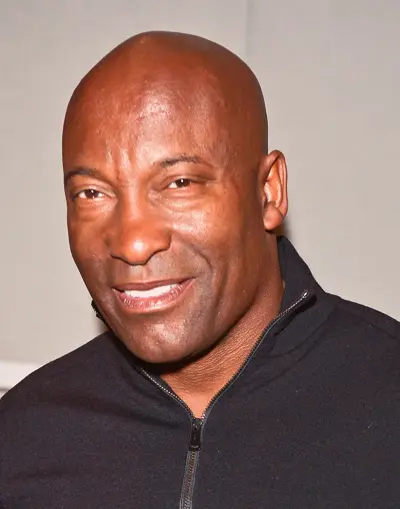
John Daniel Singleton was an American film director, screenwriter, producer, and actor. He was best known for writing and directing Boyz n the Hood in 1991, for which he was nominated for the Academy Award for Best Director, becoming, at age 24, the first African American and youngest person to have ever been nominated for that award. John Singleton was a native of South Los Angeles, and many of his films, such as Poetic Justice (1993), Higher Learning (1995), and Baby Boy (2001), had themes which resonated with the contemporary urban population. He also directed the drama Rosewood (1997) and the action films Shaft (2000), 2 Fast 2 Furious (2003), and Four Brothers (2005). He co-created the television crime drama Snowfall. He was nominated for the Primetime Emmy Award for Outstanding Directing for a Limited Series, Movie, or Dramatic Special for "The Race Card", the fifth episode of The People v. O.J. Simpson: American Crime Story.
