Rutherford B. Hayes Quotes
It is the desire of the good people of the whole country that sectionalism as a factor in our politics should disappear...
“Sectionalism” really referred to the North / South animosity which carried over from the Civil War. The South would hardly ever elect a Republican as it was the Republican Lincoln Government that ended slavery and put down their rebellion in the Civil War. There was a language difference that was much greater than modern times and the South was way behind most of the rest of the country in terms of education and standard of living. Every time the Federal Government would try and enforce the Constitution with respect to race, the sectional friction would break out again. The sectional issues carried into the 21st century but had gotten much better.
Rutherford B. Hayes, 1822-1893, 19th President of the United States (Republican, OH), State of the Union Address
Sourced by: Eigen's Political and Historical Quotations


The North and the South had major differences on the issue of Spanish Florida and whether or not the U. S. should expand by force. Northerners were generally opposed while the South had an opposite view.

Jackson was then a U. S. Senator


“Republicans” then referred to strong opponents of not only monarchy, but opposed a strong Presidency and federal government. The Federalists who supported John Adams for reelection to a 2nd term, were trounced so badly that it was the end of the Federalist Party. Their attacks on Jefferson had been particularly vicious with the hyperpartisanship as bad as in the early years of the 21st century. Jefferson tried to unify the nation with this quotation. It helped but there was still much bitterness.
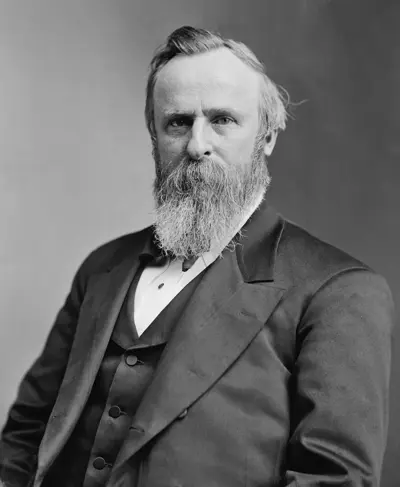
Rutherford Birchard Hayes was an American politician and attorney who served as the 19th president of the United States from 1877 to 1881, after serving in the U.S. House of Representatives and as governor of Ohio. A lawyer and staunch abolitionist, he had defended refugee slaves in court proceedings during the antebellum years. He negotiated the political agreement to end federal support of Reconstruction.
