Justinian I Quotes
The greatest blessings granted to human beings by God's ultimate grace are priesthood and kingdom.
Justinian I, 483-565, Roman Emperor of Byzantium, Sixth Novella
Sourced by: Eigen's Political and Historical Quotations


Quintus Septimius Florens Tertullianus


Much of the Catholic Church was greatly influenced by Aquinas long past his death. This quotation laid the foundation for the view, that anything the Church does, even if seemingly wrong or absurd, has some positive value. Here, Aquinas refused to totally condemn the Church practice of giving indulgences (official absolution for serious sins) to the rich in exchange for money. His view assumes that there must be some good in all acts of the church, even if we can not now determine it. This view makes reform very difficult even after the evil is recognized. Some theologians argue that although this perpetuates some bad practices, it provides stability and prevents leaders of the church from constantly trying to adapt the church to meet current popular or civil criticism.


Justinian, like many civil political leaders before and after him, took great pains to minimize the civil authority of the church. Separation of church and state is not a modern notion, though it was harder to accomplish in antiquity. Rulers would want to coopt the religion to help legitimize their rule, but tried to keep the church as weak as they could unless another religion was challenging for supremecy.


The so-called Second Crusade


Constantine the Great

The monetary corruption of the Church and many of its priests did not go unchallenged by Catholics of the day.

This is a very important quotation because it reflects the attitude of many of the leading American expansionists and imperialists of the period—ie that American imperialism would uplift peoples around the world. This was an extension of the religious motive of many of the British imperialists who referred to the “3 Cs”: Commerce, Civilization & Christianity. Seelye himself was a missionary of the Protestant Dutch Reformed Church.


See Morris Eigen {621723} for a similar but differently nuanced perspective.
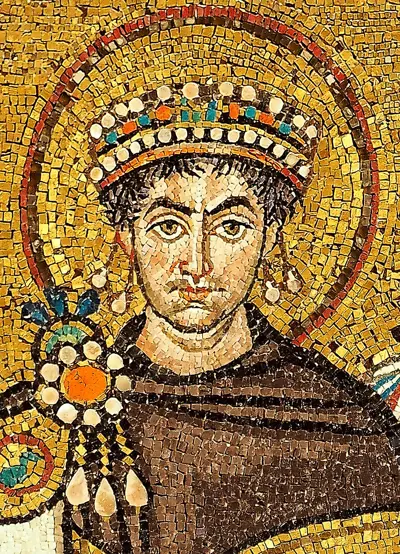
Justinian I, also known as Justinian the Great, was the Byzantine emperor from 527 to 565.
