John Wycliffe Quotes
Crown and cloth maken no priest, nor emperor's bishop with his words, but power that Christ giveth; and thus by life have been priests known.
John Wycliffe, ~1324-1384, English religious reformer & Bible translator, Quoted in John Neville Figgis, Typical English Churchmen, 1909
Sourced by: Eigen's Political and Historical Quotations


The clergy of the colonies were split on the American Revolution, but those clergy who supported the revolution made a huge contribution to the individual American’s intellectual view of the legitimacy of Parliament’s making laws governing the American Colonies. The anti-British clerics called for action while other forces of colonial America urged caution.


Quintus Septimius Florens Tertullianus


The Roman Catholic Clergy as well as the Vatican was quite corrupt in Luther’s time which was one of the reasons for his reform effort. Throughout history some clerics have abused their positions and roles and acted as impediments to the faith in their own religions.
_0_thumbnail_47x47.jpg "Statue of Robert Hall in Leicester.")
Many of the founding fathers were aware of such views in England as the same issues were being debated in America in the debates on Ratification of the Constitution and the required inclusion of the Bill or Rights—specifically the First Amendment.

England had, under Henry VIII, left the Roman Catholic Church where the King replaced the Pope as head of the English Church. Henry’s successors then had to organize and manage the national Christian church. James was discussing the hierarchy of the Church of England and there was a suggestion that Bishops be eliminated and have every priest directly responsible to the crown. Bishops would be powerful figures who might form a power center. (They did later). However, King James I observed that the King is God’s choice and rules by divine right. So there had to be bishops to crown kings. The bishoprics were retained.


The King assumed the role of head of the Church of England.
King Henry VIII had left the Roman Catholic church and taken England and Ireland out also. He replaced the Pope as the head of the English and Irish churches. There was much opposition in Ireland and the priests were the most assertive opponents to the change and were still loyal to the Pope. Queen Elizabeth continued to have problems with the Priests. James I, Elizabeth’s successor, became fed up by the Roman Catholic Priests and therefor issued this Proclamation.


The Founding Fathers represented a wide range of religious beliefs from orthodox Christians to Agnostics and Atheists. Most considered themselves Christian, but having studied the terrible results of European religious dissention in Government were careful to keep government and religion separate. In New York City, for example, when George Washington was first inaugurated as President, there was no religious ceremony in the government buildings. However, the President and all the Congress then went to Trinity Church close by and had a religious service. The earliest example of separation of church and state was a separation of official religion—not an elimination of religion.


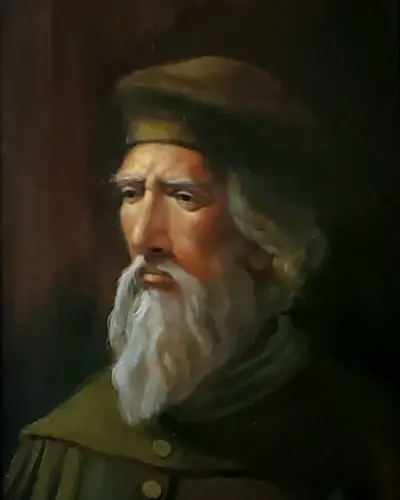
John Wycliffe was an English scholastic philosopher, theologian, biblical translator, reformer, priest, and a seminary professor at the University of Oxford. He became an influential dissident within the Roman Catholic priesthood during the 14th century and is considered an important predecessor to Protestantism.
