Tara Singh Quotes
The Englishman has gone, but our liberty has not come. For us the so called liberty is simply a change of masters, black for white. Under the garb of democracy and secularism our Panth, our liberty and our religion are being crushed.
Singh is a Sikh cleric. Sikhs are the third largest religious group in India.
Tara Singh, Indian Sikh Master, President, All India Akali Conference, Presidential Address, All India Akali Conference, Amritsar, March 28,1953.
Sourced by: Eigen's Political and Historical Quotations


Jinnah and other Muslim leaders had stirred up the Muslims to violence to put pressure on all the parties to accede to Jinnah's Muslim League's demand of an independent Muslim nation—Pakistan. Messervy was very sympathetic to the Muslim leadership as he had been feuding with and frustrated by the predominantly Hindu ruling Congress Party. After partition he accepted the mercenary position of Commander in Chief of the Pakistani Army. Then he was shocked and horrified at the slaughter of the terrorist attacks by the Muslims—about 4,000 Sikh men, women and children had been beaten and cut to death. The Sikhs had been targeted largely because Sikh leaders had recently announced that if there were a Partition, Sikhs would refuse to live in nation under Muslim control.

Jinnah himself preached non-violence. At the time there was vicious sectarian violence throughout India but especially in The Frontier Province. However, the Muslims of the day did not heed him or Nehru or Gandhi for that matter and the violence continued. Jinnah however was a particularly shrewd politician who successfully used the threat of Muslim violence to obtain a separate Islamic state with Indian independence. He pointed to the threatening resolution issued earlier {627153}. The man who publicly preached peace, privately threatened violence.


St. Domingue was the name of Haiti which had had the only successful national slave revolt, but it was incredibly bloody with many casualties.

The problem was that the British had adopted an Indian Civil Service system and instituted an educational system to train Indians. The Hindus attended the schools and did very well on the examinations. The Muslims, however, resisted the secular education, and most of their young men could not pass the examinations. See {616924} & {616925}.

The Congress was encouraging all men volunteer for the military and defend the new nation now that the British were landing in force to put down the revolution. By modern language standards, this is a little “over the top” but it shows not only the passion felt by the Congress but the importance they placed on the struggle.


Journalists and writers are among the most persecuted people in Islamic nations and even writers in non-Muslim nations have been murdered and intimidated for writing material that fundamentalist Muslims thought was heresy.


This famous quotation, from this important address, at such a critical time in history has been admired for years. Despite his great oratory, the next months were to see almost 2 million Indians of all faiths killed in what was probably the worst internecine violence in human history. Ironically, the politically motivated terrorism had stopped since all the decisions had been made. The motivation for the frightful atrocities that took place from then on was vengeance and fear of more vengeance." 1st Earl Mountbatten of Burma


From the latter part of the 20th century onward, religious nationalism was no longer a force for most religions and nations except Muslim countries. It was the only religion left where a large proportion of the adherents saw no distinction between the religion and the government. Nations that had separation of church and state were not conducive to the extreme fundamentalist form of Islam where the Secular Leader and the Religious leader was to be embodied as a single person. As a result Islamic religious nationalists argued for a Theocracy and at times fought for it with violent means. The secular government typically, to curtail the violence and prevent a religious takeover, often outlawed the extreme religious Islamic parties. While Aslan cites the Muslim Brotherhood failure in Egypt as a desirable outcome, the only way the other forces of Egyptian society could prevent the Islamists from taking over turning the country into a theocracy was to forcefully repress the extremists. The Turkish outcome was much better, but there was the threat of repression of the Justice and Development Party when it won a majority control of the government. There were explicit threats that if it tried to weaken the secular nature of the government as Ataturk had formulated it, the military would come “out of the barracks” and oust the government as they had done before. There were nations like China which persecuted religions such as certain forms of Christianity, but those religions were not fighting for religious nationalism. They only wished the freedom to practice their religion and had no program or theology that argued for Christianizing the government. The Tamil Hindus of Sri Lanka did not want a Hindu government and were perfectly free to practice their religion. The problem was that they felt that there was systemic social and economic discrimination against the Tamils and they fought for independence—not of a Hindu state, but of a secular, nondiscriminatory state of equal opportunity.


Two months earlier, Jinnah and the Muslim League had, behind the scenes, orchestrated and abetted vicious, murderous, terrorist attacks on Sikhs by Muslim tribesman brought into the Punjab for the purpose." Master Tara Singh

This is one of the more passionate and colorful descriptions of Conservatives in the political literature. The conservative party were called Orangists as they were supporters of the monarchy of William V, Prince of Orange. As in modern times the conservatives included the upper classes, business people, religious advocates. The political conservatives were passionate, respected established authority, and in general, reactionary. The tended even then to flip-flopping as the conservatives had several factions--business conservatives, religious conservatives, monarchial conservatives, authoritarian conservatives and others. Depending on which faction was most powerful at the time, conservatives might advocate one position and change later when another faction was in control. Valckenaer also had some choice words to reflect his disdain for them. It is noteworthy that this description could describe political conservatives in almost any time period, in any culture. For example, it might have been a liberal writing about the Tea Party Republicans in 2014.

This do called “Direct Action” resolution was a threat of war. The view of these Muslims was that living in a democracy with a majority of Hindus would be “slavery.” Faced with this intimidation and that of Jinnah {627169} the British agreed to partition India.

Quintus Septimius Florens Tertullianus

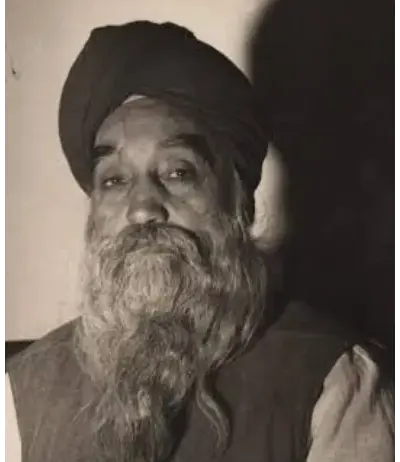
Master Tara Singh was a Sikh political and religious leader in the first half of the 20th century. He was instrumental in organising the Shiromani Gurdwara Prabhandak Committee and guiding the Sikhs during the partition of India, which he strongly opposed. He later led their demand for a Sikh-majority state in Punjab, India. His daughter, the Indian journalist and politician Rajinder Kaur, was killed by Sikh militants in Bathinda.
