Calvin Coolidge Quotes
The collection of taxes which are not absolutely required, which do not beyond reasonable doubt contribute to public welfare, is only a species of legalized larceny. Under this Republic the rewards of industry belong to those who earn them.
Coolidge, Calvin. "Inaugural Address." Washington, D.C., 4 Mar. 1925.


whether or not to buy luxuries This quotation and {639885} together illustrate why it is so difficult to classify historical politicians in the left-right categories of a future time. Here Gogel seems a strong liberal arguing for progressive taxation and luxury taxes, and tax relief for the poop, while in {639885} he sounds like a 21st century extreme conservative.


There are two reasons that government cannot depend on the rich for tax yield. First, there are very few rich compared to middle class workers. Although the rich person may pay more on the average in taxes, than others, there are not enough to cover all the expenses of a modern government. Second, because the rich make larger policitcal contributions and have lobbyists, they get legislation that exempts them from many taxes or provides loopholes. So even though the wealthy are theoretically supposed to pay a higher rate of taxes, as a practical matter, most wealthy people pay a lower tax rate than their secretaries or the waiter who will serve them lunch—the Buffet Principle.


Opposing the ratification of the United States Constitution: Left before it ended.

The phrase is carved above the entrance to the IRS Headquarters in Washington DC


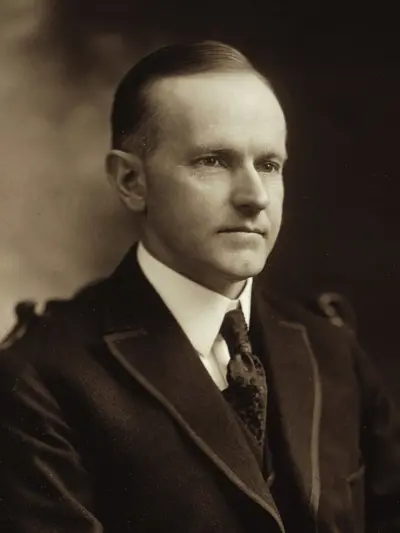
Calvin Coolidge was an American lawyer and politician who served as the 30th president of the United States from 1923 to 1929. A Republican lawyer from New England, born in Vermont, Coolidge worked his way up the ladder of Massachusetts state politics, eventually becoming governor of Massachusetts. His response to the Boston Police Strike of 1919 thrust him into the national spotlight and gave him a reputation as a man of decisive action. The next year, he was elected the 29th vice president of the United States, and he succeeded to the presidency upon the sudden death of Warren G. Harding in 1923. Elected in his own right in 1924, he gained a reputation as a small-government conservative and also as a man who said very little and had a rather dry sense of humor.
