Claud Cockburn Quotes
The Cliveden Set
The set was in favor of the policy of appeasement. The name came from the seat of Lord and Lady Astor, who were both supporters of the policy. To some the policy was seen as pro-Hitler, but in reality they were supporting the position of the Prime Minister, Neville Chamberlain. For more on this topic see {597331} and {597329}
Claud Cockburn, 1904-1981, British journalist, “News sheet,” The Week, June 17, 1936
Sourced by: Eigen's Political and Historical Quotations

After a reception given by Lady Astor, Channon wrote in his diary that the “Cliveden Set” {598323} would be criticized because it was in favor of the policy of appeasement. The name came from the seat of Lord and Lady Astor, who were both supporters of the policy. To some the policy was seen as pro-Hitler, but Channon saw it as reasonable and in concert with Neville Chamberlain’s views. Even so, Chamberlain’s policy of appeasement was very controversial. This very policy prevented early Allied involvement in World War II and therefore gave Hitler time to buildup the German military while invading much of Eastern Europe.
The “Cliveden Set” {598323} was in favor of the policy of appeasement. The name came from the seat of Lord and Lady Astor, who were both supporters of the policy. The policy of appeasement was later seen as a big mistake because it prevented early Allied involvement in World War II and therefore gave Hitler time to buildup the German military while invading much of Eastern Europe.

When he first came to Congress, there were major American problems with both France and England who were fighting each other and punishing America for not boycotting the other nation. Many argued for peace and living with the French and English impression of American seamen and confiscation of American Cargoes. Clay and others thought the appeasement price was too high and urged war. The War of 1812 followed.


Many in the House were calling on England to fulfill its treaty obligations and stop Hitler and the Germans from overrunning Europe. Prime Minister Chamberlain, kept trying to appease Hitler by giving in to some of his demands. The more he gave in, the greater the demands became. Maxton was one of the few members of Parliament who wanted to give the Prime Minister more time to avoid war. Chamberlain’s efforts failed miserably and Hitler already had a huge advantage.

The first Bishop in Britain, sent by Pope Gregory in 597. This was in large part fulfilled in 607 when Ethelfrith led Saxon troops to Wales killing many including 200 priests who had been sent to pray for the Welsh.


1st Earl Lloyd-George of Dwyfor. Over half a century later a Israeli Prime Minister also used the phrase. {594350}


While Queen Mary was presenting medals to British soldiers during World War I, she said this to a soldier who had exclaimed “No more bloody wars for me”.


This idea came from Dutch Philosopher Benedict Spinoza. See his quotation from 1677.

This speech was officially prepared and read to the six Indian tribes of the Iroquois Nation. The purpose was to persuade the Iroquois Indians to stay neutral (see {583726}) in the coming conflict with England. The Iroquois had traditionally traded peaceably with the colonists and on many occasions the colonists and the Iroquois had fought against the French and other Indians. Unfortunately, a Mohawk chief, Joseph Brant, had traveled to England and been educated there. He, following the conventional wisdom of the day persuaded most of the Iroquois tribes to join the obvious winner—England—and fight on their side. Only the Oneida tribe resisted Brant’s advice, and joined the revolutionists. The result was a civil, fratricidal war of not only white, but also the Iroquois Indians who had been at peace with each other since any could remember. When the colonists won, the Oneida were warmly embraced and participated in New York and other colonial life and activities. The relationship was so good that a little over 200 years later the average earnings of the Indian in New York State exceeded that of the average white man. The other 5 Iroquois tribes however were attacked and driven out of their traditional territories and they fled with Joseph Brant to English Canada where they have not yet fully recovered their important place in the society.


Jean the Good. It was not uncommon for wealthy nobles who were about to be defeated on the field of battle to offer bribes to the opposition soldiers to take them to their lines or headquarters. However, the leaders of the Army wanted to have charge of the important prisoners and the terms of their potential ransom. In this case the English knights started fighting amongst themselves as to who would take and ransom the French King, when two high ranking English nobles who had been dispatched by the Prince of Wales to look for the French King. They ordered the knights to desist their internal fighting, and the French King was delivered to the Prince of Wales.


The Chancellor was referring to the United States George W. Bush proposal for war with Iraq.


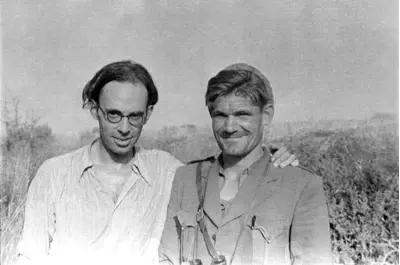
- Born: April 12, 1904
- Died: December 15, 1981
- Nationality: British
- Profession: Journalist
Francis Claud Cockburn was a British journalist. His saying "believe nothing until it has been officially denied" is widely quoted in journalistic studies, but he did not claim credit for originating it. He was the second cousin, once removed, of the novelists Alec Waugh and Evelyn Waugh. He lived at Brook Lodge, Youghal, County Cork, Ireland.
