James A. Garfield Quotes
The chief duty of the National Government in connection with the currency of the country is to coin money and declare its value. Grave doubts have been entertained whether Congress is authorized by the Constitution to make any form of paper money legal tender. The present issue of United States notes has been sustained by the necessities of war; but such paper should depend for its value and currency upon its convenience in use and its prompt redemption in coin at the will of the holder, and not upon its compulsory circulation. These notes are not money, but promises to pay money. If the holders demand it, the promise should be kept.
During the Civil War, the U. S. Government printed paper money (specie) for the first time. 20 years afterward, the paper money was still controversial.
James A. Garfield, 1831-1881, 20th President of the United States (Republican, OH), Inaugural Address, March 4, 1881
Sourced by: Eigen's Political and Historical Quotations

At the time, a bank note—paper money issued be a private bank—was not backed by any gold or silver and was not insured bym the government. A bank could print as much as they wanted, so it was always worth less as the further you were from the particular issuing bank, the less you could get your bank note, because no one knew whether or not the issuing bank would redeem the note or even be in existence. So every private bank note had diminished value for the public. However, carrying gold and silver around and making change for precious metals was difficult and often impractical. So people used banknotes. The same thing happens with credit cards today. The merchant has to pay a fee to the credit card company and the bank and therefore charges us more for whatever we buy. But most consumers and merchants are willing to pay the difference to obtain the convenience of the credit card,

America had a difficult early history with money—especially paper money which had been issued by private banks but were trusted by few. Paper money had for the first time had been issued by the Federal Government during the Civil War. Many saw it as a wartime measure but not a good practice to follow. Garfield, along with many other leaders thought that it was not constitutional for Congress to issue paper money. Others prevailed as the need for a lighter and more practical form of currency was necessitated by a growing economy. Coins for large transactions between businesses especially was very awkward when chests of coins had to be delivered to pay for cattle, produce or manufactured goods at the wholesale level.


Much of the South during the Civil War lived in a fantasy universe where all the reality would not impinge upon them. Eggleston was an accomplished writer who had served in the Confederate army of the Civil War. 20 year after the war he wrote a series of articles for the prestigious Northern Atlantic Monthly trying to convey the war from the Southerner’s point of view. The South just kept printing money to take care of their perceived war and civilian needs without regard to the value of the money they were printing. Even in the 21st century collectors had a great deal of Confederate paper money, that had value only as a historical curiosity.

The same argument can be made against the modern paper money supply. What Jefferson and most of the founding fathers, with the exception of Alexander Hamilton. did not realize was that the major stability of any kind of money was not only the silver or gold that backed it but the political and legal stability of the nation and the size of its productive economy. Where Jefferson was right however is that all these banknotes at the time were issued by local private banks. The Government had no responsibility for paper money and had no knowledge of how much paper money any bank issues and whether or not they had any silver to back it up. Banks didn’t trust other bank’s notes and would only redeem them at a discount. A $10 note from a South Carolina bank might only be worth $7 in New York and $6 in Boston. The early American monetary system was a mess.

At the time, there was no United States currency. Private banks in some of the states issued their own money. A dollar from Georgia might only be worth 75 cents in New York.


What Franklin Delano Roosevelt began, President Nixon would in 1971 complete by removing America from the gold standard entirely and ending fixed rates of exchange. There have been those in government who did not understand the modern economics of money and who believed that currency had to have a fixed rate of exchange for gold or silver otherwise it was worthless. Roosevelt had to deal with them as did Nixon later. Even into the 21st century when it had been amply demonstrated that the best currency in the world was the United States dollar precisely because it was backed up by the full faith and credit of the United States Government, there were those who complain that United States money is not sound currency and argue for the return of the gold standard.

At the time there was no national paper money. Individual banks printed their own and paper money was not accepted or heavily discounted most Americans. Most opposed a tender law that required paper money to be accepted in commerce.


This quotation came into play in 2011 when the Tea Party tried to cause the US to default on its debts rather than raise the debt ceiling. Even their unsuccessful attempts caused much loss of confidence for America the world over, violating McKinley’s principle.


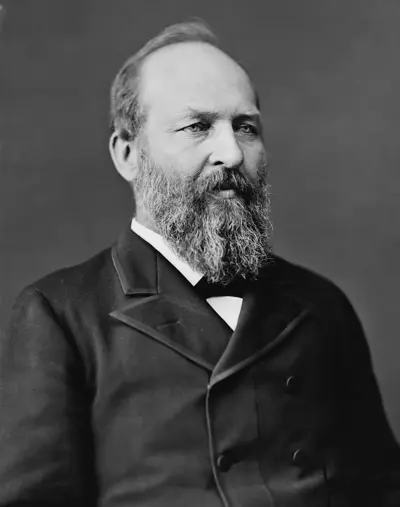
James Abram Garfield was the 20th president of the United States, serving from March to September 1881. Garfield was shot by an assassin four months into his presidency and died two months later. He is the only sitting member of the United States House of Representatives to be elected to the presidency.
