Thomas Paine Quotes
Paper money is like dram-drinking, it relieves for a moment by deceitful sensation, but gradually diminishes the natural heat, and leaves the body worse than it found it. Were not this the case, and could money be made of paper at pleasure, every sovereign in Europe would be as rich as he pleased. But the truth is, that it is a bubble and the attempt vanity. Nature has provided the proper materials for money: gold and silver, and any attempt of ours to rival her is ridiculous.
Paine, Thomas. Dissertations on Government, the Affairs of the Bank, and Paper Money. Charles Cist, 1786.


At the time, a bank note—paper money issued be a private bank—was not backed by any gold or silver and was not insured bym the government. A bank could print as much as they wanted, so it was always worth less as the further you were from the particular issuing bank, the less you could get your bank note, because no one knew whether or not the issuing bank would redeem the note or even be in existence. So every private bank note had diminished value for the public. However, carrying gold and silver around and making change for precious metals was difficult and often impractical. So people used banknotes. The same thing happens with credit cards today. The merchant has to pay a fee to the credit card company and the bank and therefore charges us more for whatever we buy. But most consumers and merchants are willing to pay the difference to obtain the convenience of the credit card,

The same argument can be made against the modern paper money supply. What Jefferson and most of the founding fathers, with the exception of Alexander Hamilton. did not realize was that the major stability of any kind of money was not only the silver or gold that backed it but the political and legal stability of the nation and the size of its productive economy. Where Jefferson was right however is that all these banknotes at the time were issued by local private banks. The Government had no responsibility for paper money and had no knowledge of how much paper money any bank issues and whether or not they had any silver to back it up. Banks didn’t trust other bank’s notes and would only redeem them at a discount. A $10 note from a South Carolina bank might only be worth $7 in New York and $6 in Boston. The early American monetary system was a mess.


The very act of printing money created a debt—at the time and until the Nixon Administration which went off the gold standard—the government owed the gold or silver and the spicie—the printed money—was a promissory note.


This is a remarkable quotation in that it proposed exactly what the United States did in the Nixon administration. We went off the gold standard and backed American money with the wealth and “full faith and credit” of the nation and all its assets. It has been the strongest and most sought after currency in the world despite the fact that it is not backed by gold or silver as earlier American currency was.

During the Civil War, the U. S. Government printed paper money (specie) for the first time. 20 years afterward, the paper money was still controversial.
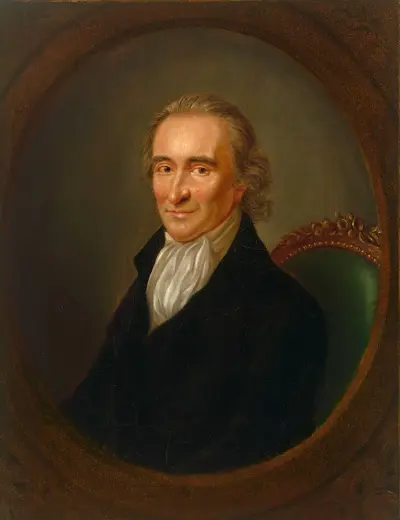
Thomas Paine was an English-born American political activist, philosopher, political theorist, and revolutionary. He authored Common Sense (1776) and The American Crisis (1776–1783), the two most influential pamphlets at the start of the American Revolution, and helped inspire the patriots in 1776 to declare independence from Great Britain. His ideas reflected Enlightenment-era ideals of transnational human rights. Historian Saul K. Padover described him as "a corsetmaker by trade, a journalist by profession, and a propagandist by inclination".
