Agnes Smedley Quotes
So I had to be the doctor to these wounded men until we could remove them to the hospital. There were fifty-four women and forty little boys with the Red Army prisoners, and I went daily to take care of them also.
Smedley, Agnes. Battle Hymn of China. Alfred A. Knopf, 1943.


The advances of battlefield medicine produced a very large increase in the number of wounded veterans and an unprecedented demand for nurses and other medical personnel. In the Iraq war over half a century later, the need exploded still further. But the need to “serve those who served” approach has not been tried.


Little was done and it is estimated that half the Eskimo population was wiped out as the result of flu that turned to pneumonia and measles epidemics at the same time for a population that was not very well nourished to start with.


This is an aspect of the American Revolution that is rarely described in American history books. Rush ran the hospitals for the Revolutionary Army and talked to many officers and enlisted men, and also observed much of the British military practices.


Prior to this order, some German submarines had assisted the survivors of torpedoed ships. None did after and some actually machine gunned survivors in the water. One aspect of the quotation that is particularly interesting was the Admiral’s justification example of the Allied bombing of German Cites. What he did not say was that this practice did not begin until Germany—at the insistence of Hitler—ignored the Geneva Conventions and bombed London, Coventry and other English cities. Hitler declared London an “Open City”. The Allies retaliated by bombing factories that were in German Cities. After the war Donitz was found guilty of Unrestricted Submarine Warfare and using thousands of slave laborers in his shipyards. He was sentenced to 10 years, one of the lightest sentences if the German War Crimes Trials.
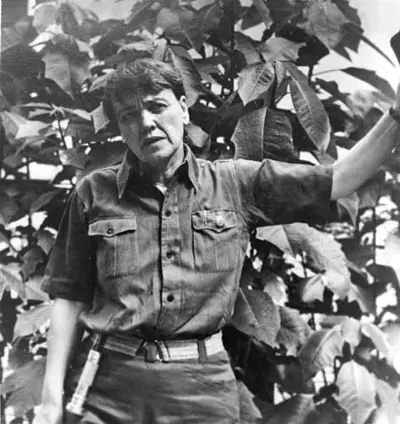
Agnes Smedley was an American journalist, writer, and activist who supported the Chinese Communist Revolution. Raised in a poverty-stricken miner's family in Missouri and Colorado, she dramatized the formation of her feminist and socialist consciousness in the autobiographical novel Daughter of Earth (1929).
