John F. Kennedy Quotes
On your willingness to contribute part of your life to this country…will depend the answer whether a free society can compete.
John F. Kennedy, 1917-1963, 35th President of the United States (Democrat, MA), Speech, October 14, 1960
Sourced by: Eigen's Political and Historical Quotations


Discussing alleged meager compensation for public service:


The Society of Cincinnati was formed just after the Revolutionary War by officers of the army, to perpetuate friendships, to aid each other and the widows and orphans of members, and to honor their French allies and comrades:


He had been attacked by the extremists in his own party for serving as the Ambassador to China during a Democratic administration. Huntsman, fluent in Chinese and very familiar with Chinese culture, was a very successful Governor and was recognized by President Obama as being uniquely qualified and as a Patriot he made this great statement about service to country


Russell despised the Commission Chairman, Chief Justice Earl Warren and had refused to serve. Johnson changed Russell's mind. See Richard B. Russell.


This may be Kennedy’s most famous line. However he was not the first orator to express this idea however. See Khalil Gibran {601423}, Warren G. Harding {622594} and {629021}, St. John Broderick {595734}, and Oliver Wendell Holmes Jr. {603707} for earlier expressions of similar sentiments. Holmes seems to be the first to express the idea while the earliest seems similar phraseology seems to be the British Politician St. John Broderick in 1893 {595734}. Although, these earlier expressions existed, Theodore C. Sorensen, who assisted Kennedy with this speech and wrote the draft, had distilled it from earlier expressions and views of JFK and said that these were Kennedy’s words. At the time, he stated that was unaware of the Gibran, Harding, Broderick and Holmes sentiments. Gibran had not yet even been translated into English. However it is not clear whether Kennedy himself had inadvertently recollected the phrase from any of the other quotations. (The question was never put to him.) The St. John Broderick quotation is a possible source. Kennedy was quite familiar with British political history, and his father and been U. S. Ambassador to Great Britain. Regardless, the quotation was as great for the place and timing—his inaugural—as it was for the phraseology which might have originated elsewhere.


Theodore Roosevelt had just been nominated as Vice President and the Republicans were almost certain to win the general election. The Chairman was alsays very distressed by Roosevelt. The New York conservative Republicans leaders had pushed him out of the Governorship by getting him nominated as VP as NY business leaders were fearful of TR’s business reform ideas. Hanna worried that if TR ever reached a position of power, he would alienate business from the national Republican party. When McKinley was assassinated, Hanna’s worst fears were realized. See his reaction {585078}
He was criticized by the right wing extremists of the Repuplican Party for serving a Democratic President (Obama) as Ambassador to China. He was the most qualified person for the job as he was an experienced politician, spoke Chinese fluently and was very knowledgeable about Chinese culture and history. The President had asked him rather than many people of his own party. Huntsman’s quotation is probably the most patriotic and eloquent statement of national service ever made.

This sentiment is conceptually remarkably similar to JFK’s famous quotation in his inaugural address {589867}, however there is no evidence that Kennedy or his speechwriter were aware of Harding’s speech.

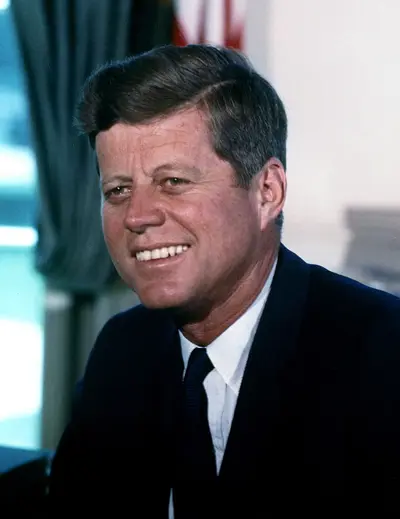
John Fitzgerald Kennedy, often referred to by his initials JFK, was an American politician who served as the 35th president of the United States from 1961 until his assassination in 1963. Kennedy served at the height of the Cold War, and the majority of his work as president concerned relations with the Soviet Union and Cuba. A Democrat, Kennedy represented Massachusetts in both houses of the U.S. Congress prior to becoming president.
