Harry Johnston Quotes
Nova Scotia as a British colony also came into being as another result of these adventurous British expeditions to North America in the reign of James I.
Johnston, Harry. Pioneers in Canada. Blackie and Son, 1912.


Ironically America bought the Louisiana Territory from the French, and the French traded Canada to England for Guadalupe. These are probably the two worst real estate deals ever made by a nation—and it was the same nation in both cases.


This quotation shows 1) that the American Colonists saw their country to be as including Canada. See Thomas Jefferson for more on that point: {636940}. 2) That the Continental Congress misread the situation in Quebec assuming that the cultural values of New England were those of Quebec. Given the strong French tradition in Quebec, and the dependence on trapping and trading, Quebec was quite different. Also, England had acted to secure Quebec militarily. See {636939}.

One of the reasons that Jefferson and others were so anxious to expand the territory of the United States was that Britain had operated with the policy that curtailed and limited the population growth of the American colonies and the resentment of this policy led to growth of America and the Westward expansion.

He was contrasting the English efforts in the New World and the French. New France was the term for the early French North American areas much of which was in Canada. This classic view argues for the superiority of a capitalistic and individualistic development model over a planned one organized from the top down,


Clinton was a founder of the society.
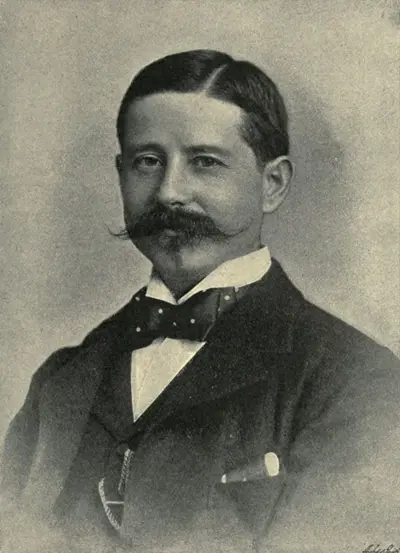
Sir Henry Hamilton Johnston GCMG KCB, known as Harry Johnston, was a British explorer, botanist, artist, colonial administrator, and linguist who traveled widely in Africa and spoke many African languages. He published 40 books on African subjects and was one of the key players in the Scramble for Africa that occurred at the end of the 19th century.
