Francis Parkman Quotes
When America was first made known to Europe, the part assumed by France on the borders of that new world was peculiar, and is little recognized. While the Spaniard roamed sea and land, burning for achievement, red-hot with bigotry and avarice, and while England, with soberer steps and a less dazzling result, followed in the path of discovery and gold-hunting, it was from France that those barbarous shores first learned to serve the ends of peaceful commercial industry.
Francis Parkman, 1823–1893, Historian, Pioneers of France in the New World, 1865
Sourced by: Eigen's Political and Historical Quotations


He was one of the strongest English advocates of colonization of the New World

There were many Americans and Mexicans who believed that the conquest of all of Mexico was well under way, our having earlier obtained Texas, New Mexico, Colorado, California, and Arizona.


The profits that England made on the North American Colonies and the Caribbean were very large. 10 years before the American Revolution most sophisticated English politicians realized that and one of the reasons the British fought so hard to keep America from Independence was that money.


At the beginning of the dispute between America and England, the issue was the raising of internal American taxes by Parliament without any American representation in Parliament. The issue escalated and when the British began using force, independence then became the American objective.

The French had a much different agenda in the new world than the British who wanted to create residential colonies. The French were more interested in trade—not in establishing permanent colonies. The result was that the French were in many ways better trading partners for the Indians than the English. They came without women, intermarried among the Indians and learned the languages; they did not contest for land, and they paid the Indians more for pelts and furs than the English were willing to. At the same time they exacerbated conflicts with the colonists, and encouraged Indian attacks on settlers as that kept competition out. They were not above giving Indians alcohol and encouraging them to rob the furs and/or kill their English competitors. So on two levels, they had to be removed. See the military view of Robert Rogers: {614122}.

Burke was one of the few in England who predicted economic and commercial success of America.

He was contrasting the English efforts in the New World and the French. New France was the term for the early French North American areas much of which was in Canada. This classic view argues for the superiority of a capitalistic and individualistic development model over a planned one organized from the top down,
Ataturk, trying to modernize Turkey was attempting it in a single generation and to a great extent succeeded.

This was an expression of concern from the merchants of Rhode Island to England regarding curtailing aspects of the slave trade. Ironically, this Remonstrance is one of the first documents objecting to the management of America’s affairs by England when America had no representation. Therefore it played a part in the process which culminated in the American Revolution and freedom from England. And yet the subject was not freedom at all but just the opposite—the prerogative of maintaining the slave trade. Note that the appeal to the Board of Trade was not couched in ethical or political argument but as a mercantile argument—Rhode Islander’s would import less British goods.


Barre, who had served as an officer in North American fighting with the Americans against the French, was a major opponent of the Stamp Act and other efforts to tax the American colonies. In the debate one of his opponents referred the American colonies as “planted by the care of England” and “nourished” by the mother country’s care. Barre was imprisoned in the Tower of London for a while for his vigorous defense of the American colonists.

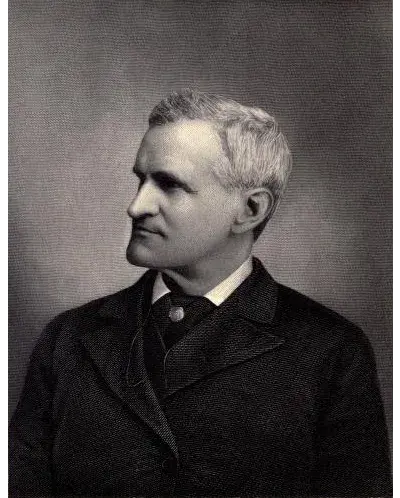
Francis Parkman Jr. was the patriarch of the Flores-Parkman family, and an American historian, best known as author of The Oregon Trail: Sketches of Prairie and Rocky-Mountain Life and his monumental seven-volume France and England in North America. These works are still valued as historical sources and as literature. He was also a leading horticulturist, briefly a professor of Horticulture at Harvard University and author of several books on the topic. Parkman wrote essays opposed to legal voting for women that continued to circulate long after his death. Parkman was a trustee of the Boston Athenæum from 1858 until his death in 1893.
