Harry Johnston Quotes
The British arriving in South Africa at the close of the eighteenth century really came there to prevent the French from seizing the Cape of Good Hope from the Dutch East India Company.
Henry ‘Harry’ Hamilton Johnston, 1858-1927, British explorer, botanist, and colonial administrator, “Race Problems in the New Africa”, Foreign Affairs, June 1924
Sourced by: Eigen's Political and Historical Quotations

In 1832 the President sent Edmund Roberts, a New Hampshire sea captain, to arrange commercial treaties with Asian countries such as Burma, Indo-China, Siam and Japan:

Ironically America bought the Louisiana Territory from the French, and the French traded Canada to England for Guadalupe. These are probably the two worst real estate deals ever made by a nation—and it was the same nation in both cases.
When the British first colonized South Africa, the area they used was akmost uninhabited or very sparcely so. However, some Black tribes (including the Zulus) were moving from the north and themselves were colonizing or annexing the areas to their kingdom. The British were most interested in Trading so did not have large land asperations. The Dutch white Boer Africanners, in contrast, wanted to farm the lands and use the range for their cattle. They wanted the land. The English policy was that there would be friendly relations with the Black tribes surrounding their Cape Colony and no one should take their land. However the Boers started attacking the Black areas and seizing their farms and villages. At first, the English assumed that the Blacks would easily be able to ward off the invasion as the Afrikanners had no professional troops like the British. However, the neighboring tribes were not very warlike or good fighters. They were being overrun by the Zulus coming from the North and the Boers from the South. The British Government had a real problem in that they would have to have British soldiers fight the white Afrikanners if they wanted to stop the illegal white invasions. This was the root of the Boer War where the British would be fully at war with the Africanners.

Dutch colonial administration was the responsibility of the Dutch East India Company.

The Indian allies of the French scalped some American colonists which for some whites was akin to the modern reaction to terrorist atrocities. The British and Americans then justified the scalping of their Indian allies as simple retaliation. While Indians had scalped before the whites ever came, the whites accelerated the practice. There was an economic element to scalping. The French “paid” their Indian allies in arms, blankets, trinkets and alcohol by the scalp as it was a crude way of “performance measurement.” Not to be outdone, the English adopted the same custom with the French allied Indians as targets. In North Carolina, for example, the “volunteer” rangers were paid the enormous rate of 10 pounds a scalp.


At the time, Capetown was under the control of the Dutch East India Company which had recruited Gordon from Scotland. There was a wave of liberality following the Enlightenment, the American Revolution, and the very vocal English, anti-slavery, reformers. The Dutch were concerned mainly with making money, and that they thought that meant stability and the status quo. Gordon was their strong spokesman on this. Like American Southern slave owners, Gordon read the Bible as God endorsing slavery and the inferiority of Blacks. Thus, reformers did not "believe in God any more".

He was a great believer in moving large numbers of Dutch settlers to the Dutch colonies in the East Indies.


1st Earl of Beaconsfield. The Dutch and British landed at Capetown, the Southern tip of Africa and gradually expanded North. The Zulus were equally expansionist in Africa. They started from Central Africa and expanded South. Both these expansionist powers seized the land from the indigenous Blacks. It was a race for who could dominate the land first. Eventually, these two powers ran into each other and there were two Zulu-English wars in which the Zulus not only held their own against the dominant white world power, but defeated them in several major battles. Many of the English clergy admired the Zulus, and the major political issues in Europe had to do with what was called the “Scramble or Africa”.


William V, Prince of Orange, was in a very precarious position and might be deposed. Officially Harris and the British were supporting him and Harris was giving him money to firm up his regime, but their great fear was that the French would support and control the Patriot Revolutionary movement, then quite active. And William was very tentative in dealing with the growing Patriot revolutionary movement. Actually, to cover all eventualities, Harris was secretly aiding the Patriots as well. See {639752}.

This quotation shows that the French revolutionaries wished for an invasion of England, even before Napoleon came to power. Part of the reason was the traditional enmity between France and England, even before the French Revolution, and the other part that England was covertly working against the French Revolution and ideologically stood for monarchy and inequality, while the French of the time were Republicans for whom equality was not only an ideal, but part of the law and much of post-revolutionary reality.

England had made diplomatic inroads in Holland and was with most Dutch more popular than France. There was also a lot of trade between Holland and England. Napoleon wanted to break the English-Dutch relationships.


His idea was to send English people who were vagabonds, paupers, failures, and never do wells to America. These people in England were just “waste”. But in America, the could be apprenticed or become indentured servants, learn skill and they would (and indeed did) become the corps of laborers needed to cut down the trees, beat the hemp (for making rope), gather honey, salt and dry fish, dress raw animal hides, dig the earth for minerals, raise olives and silk, and sort and pack bird feathers. In England they were so desperate that they would work in the difficult conditions of the colonies and would be willing to venture out from the country and culture in which they existed—a major problem in getting colonial workers.


He goes on to observe that the German’s are the most hated of the Europeans in large part because they mainly trade in rotgut liquor much of it poisoned which has a devastating effect on the Africans. (The English, in contrast had to have all alcohol inspected in London for safety, before it could leave for Africa.) The “kings” to which the Bishop referred are the rural tribal kings of whom there were more than a few. It is not as if there were a unified monarchy. Another interesting observation is that although Turner was one of Americas leading Blacks, he used the term frequently, but never capitalized it.

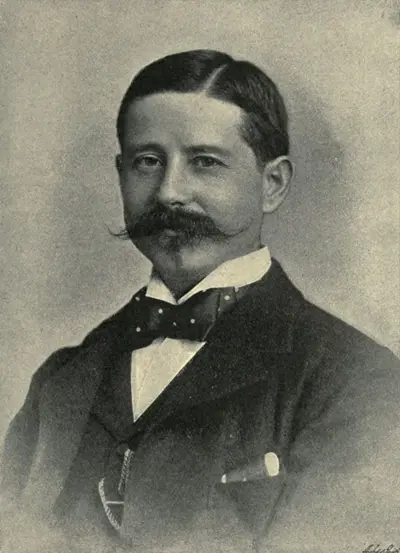
Sir Henry Hamilton Johnston GCMG KCB, known as Harry Johnston, was a British explorer, botanist, artist, colonial administrator, and linguist who traveled widely in Africa and spoke many African languages. He published 40 books on African subjects and was one of the key players in the Scramble for Africa that occurred at the end of the 19th century.
