Gouverneur Morris Quotes
No State without its consent shall be deprived of its equal suffrage in the Senate.
The motion was accepted and became part of our Constitution. This protection for the smaller States was proposed by the delegate from one of the largest States.
Gouverneur Morris, 1752-1816, U. S. Commissioner to England & U. S. Minister to France, U. S. Senator (Federalist, NY), Proposal made to Constitutional Convention, Philadelphia, PA, June 1787
Sourced by: Eigen's Political and Historical Quotations

This ruling upheld a military draft for males only. The logic was that men and women were dissimilar persons.


Quoted in the Court’s notes of the meeting


Jackson was reacting to the claimed right of South Carolina to nullify Federal tariffs and other Federal laws.
Soon after Jackson's reelection, delegates from South Carolina, led by John C. Calhoun, moved quickly to declare "null, void, and no law" the Tariff Act of 1832. The president's reaction to the Ordinance of Nullification was swift.

As the Majority Leader of the Senate he had a Senate vote and much power. As Vice President he would only preside over the Senate. He made the trade and went on the Democratic ticket shortly after this statement.

On June 12, 1789 a Senate committee proposed a federal court system for the nation. Maclay described it as:


See John Marshall's later (1803) use of the concept and term "repugnant." {606483}

On the Fugitive Slave Act: As one of the leading American Catholic intellectuals during the 19th Century, Brownson’s opinions went far in keeping Catholics from joining the side of the abolitionists. However, just a few years later his tone would change and he would become one of the few Catholic writers to refuse to defend slavery, see {610710}. While the majority of Catholics refused to join the abolition movement, they often did so because abolitionism was closely tied to anti-Catholicism, see Gordon {611392} or Shaftesbury {611106}. Other reasons included Irish immigrants fearful of competition from Black labor and the fear of liberal individualism and social disorder, which was prevalent in 19th century Catholic thought. For a further explanation on the relationship between American Catholics and slavery, see McGreevy {612036}.


The 100,000 Mormons in the Utah Territory rebelled at the hostile Federal officials coming into Utah to run things without the consent of the citizens of the territory. It was a cry for the territorial version of States’ Rights.

Mason’s view prevailed. What is interesting is that Mason saw the State as the State Legislature as opposed to the people of the state directly voting for the Senators as we do today.
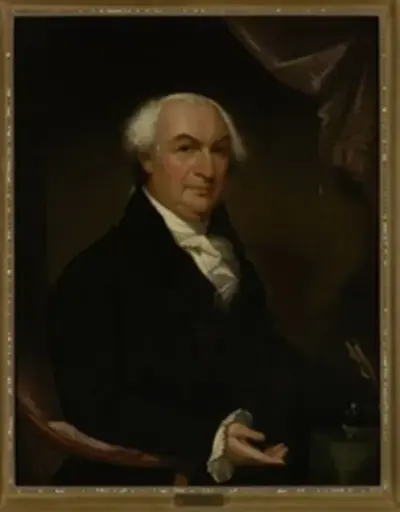
Gouverneur Morris was an American statesman, a Founding Father of the United States, and a signatory to the Articles of Confederation and the United States Constitution. He wrote the Preamble to the United States Constitution and has been called the "Penman of the Constitution." In an era when most Americans thought of themselves as citizens of their respective states, Morris advanced the idea of being a citizen of a single union of states. He was also one of the most outspoken opponents of slavery among all of those who were present at the Constitutional Convention. He represented New York in the United States Senate from 1800 to 1803.
