WILLIAM REHNQUIST
(William Hubbs Rehnquist)
This quotation is a great example of the difficulty of deciding some of the major Constitutional issues. Most reasonable people believe that Rehnquist certainly has a point. On the other hand, critics observe that this quotation essentially says that it is OK to convict an innocent person if it cost too much or be too much trouble to do so. Reasonable people would also agree that this objection has much merit also. So the judicial system is stuck with deciding when the cost or trouble is too much. There will never, can never, be a clear cut answer.
Two openings appeared on the Supreme Court for Nixon to fill. He heard from many people on recommendations, but he wanted to fill the posts with “strict constructionists.” Rehnquist had written giving him a political operational definition of a strict constructionist. This memo was never released to the public by the White House on the grounds that it was protected by Executive Privilege. However, the definition given had virtually nothing to do with the concept of strict construction but is a definition of a ideological conservative constructing his own meaning to the Constitution. The source for the text came from John Dean, the Counsel to the President, who found this memo in his White House file and revealed it at a question and answer session at the Commonwealth Club of San Francisco, October 10, 2001.
The ruling allowed GE's employee disability insurance plan to exclude conditions arising from pregnancy. Many critics argue that the same policies paid for Viagra for men which is also significantly different.
Technically the correct title is Chief Justice of the United States. He was one of the longest-serving Chief Justices and in his tenure the court did change from a liberal court to a conservative one.
This ruling upheld a military draft for males only. The logic was that men and women were dissimilar persons.
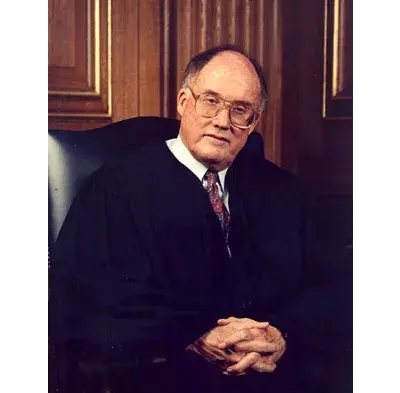
William Hubbs Rehnquist was an American lawyer and jurist who served on the Supreme Court of the United States for 33 years, as an associate justice from 1972 to 1986 and as Chief Justice from 1986 until his death in 2005. Considered a conservative, Rehnquist favored a conception of federalism that emphasized the Tenth Amendment's reservation of powers to the states. Under this view of federalism, the court, for the first time since the 1930s, struck down an act of Congress as exceeding its power under the Commerce Clause.
