William Rehnquist Quotes
Judges, like other citizens, do not wish to hinder a nation’s ‘war effort’.
William Rehnquist, Chief Justice of the Supreme Court, Quoted in New York Times Magazine, July 9, 2006
Sourced by: Eigen's Political and Historical Quotations


He was arguing that normal Constitutional limitations should not apply to the President in wartime.


With a professionalized all volunteer military, most of whom came from just a few socio-economic strata of our society, wars at the time were fought and the risks and burdens borne by a small part of American society. The rest of society, unlike the Second World War did not experience any change in their style or standard of living.

Russia, from the old Soviet Union days, had the only gas pipeline into Lithuania and took advantage of their monopoly by charging the Lithuanians 15 percent more than they charged other European nations where the Russians had some energy competition. The Lithuanians, decided to tie up a very large vessel at an island in their harbor to which Liquid Natural Gas (LGN) could be delivered by ship and converted to gaseous form and piped onto the mainland to provide competition for the Russians. However, the island was a bird sanctuary that was not supposed to be used for anything that might change the ecological balance of the island. This quotation shows that in some circumstances, environmentalists are willing to compromise to balance the benefits and costs.


In most cases, the politicians why cry most for war, will never have to risk their own lives fighting it.


Honore Gabriel Victor Requiti


He was a strong conservative who defended the George W, Bush administration, He was not alone in believing that in wartime, attacks and criticisms of the President and his administration give “aid and comfort to the enemy and weaken the nation’s resolve. However, he is almost unique in the level of hypocracy that he exhibited when a Democrat was next in the Presidency. The fact that we were in two major wars and incursions as well, did not inhibit him from viciously critizing President Barack Obama. He didn’t think this made him a “BAD” American and promptly forgot this quotation which came back to ic in haunt him.
In war time often we have behaved in ways we were embarrassed by in the fullness of time such as the internment of the Japanese Americans in WWII. The vast majority of the press was totally intimidated and any one who suggested that the administration might be wrong was not only accused of being themselves wrong but of being un-American and almost a traitor. O’Reiley probably did this better than most. History and events of course, showed later that these premises and claims were totally wrong. There were no weapons of mass destruction in Iraq and there was no Iraqi involvement in with Al Quaeda and September 11. Many people do not think O’Reily was a BAD American for being a ctitic in wartime and neither were the people he labeled as “BAD”. In a democracy, critism helps even if it is embarrassing to a particular administration.

The attack on the World Trade Towers and our military reaction to that could not fairly be blamed on Bush. However, the Iraq War was certainly a policy choice he made. And he also made the decision to cut taxes (mostly for the rich) on the assumption that this would stimulate the economy and produce even more taxes. It did not. And also on Bush’s policy responsibility was his decision not to raise taxes to pay for a war. This had never been done in American history. And Bush was fighting two wars. In addition when he took office Bill Clinton had balanced the budget and left a substantial surplus. Instead of using the surplus to pay for his other policy decisions, he spent it.

His wife also had a Doctorate in Chemistry—the 2nd woman to achieve that in Germany—and she was distraught that he had been the leading scientist developing not only the poison gas which the Germans introduced in WWI, but he also developed the tactics of use and personally went to the battlefield and supervised the first major gas attacks. This was much against the ethical value of most scientists and Jewish ethics in particular. Haber had been a close colleague of Albert Einstein and the Kaiser Wilhelm Institute, and while Einstein was trying to get scientists to sign a petition against the war, Haber was developing the first weapon of mass destruction. After Haber gave this response to his wife, we left to go to the front to supervise another major gas attack. His wife committed suicide. Haber, while a German national hero to militaristic Germany, never again had the kind of pre-war relationship that existed with Einstein and many other fellow scientists.

Moltke’s plan for the Marne Campaign did not work out as planned and he and the Kaiser had a difference of opinion so Moltke was replaced as military commander. This quotation is of critical importance as it shows that the Germans were actually planning the First World War and simply used the assassination of Archduke Ferdinand as an excuse. Thus, the reparations Germany was required to pay when they lost the war. See {642096} for more quotational evidence.


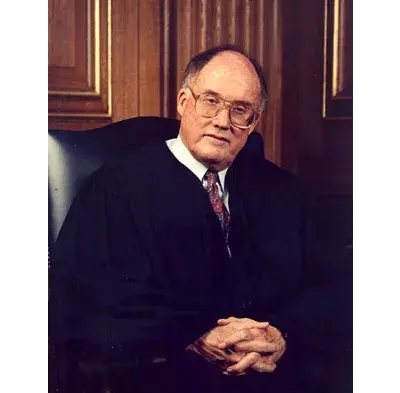
William Hubbs Rehnquist was an American lawyer and jurist who served on the Supreme Court of the United States for 33 years, as an associate justice from 1972 to 1986 and as Chief Justice from 1986 until his death in 2005. Considered a conservative, Rehnquist favored a conception of federalism that emphasized the Tenth Amendment's reservation of powers to the states. Under this view of federalism, the court, for the first time since the 1930s, struck down an act of Congress as exceeding its power under the Commerce Clause.
