FRITZ HABER
His wife also had a Doctorate in Chemistry—the 2nd woman to achieve that in Germany—and she was distraught that he had been the leading scientist developing not only the poison gas which the Germans introduced in WWI, but he also developed the tactics of use and personally went to the battlefield and supervised the first major gas attacks. This was much against the ethical value of most scientists and Jewish ethics in particular. Haber had been a close colleague of Albert Einstein and the Kaiser Wilhelm Institute, and while Einstein was trying to get scientists to sign a petition against the war, Haber was developing the first weapon of mass destruction. After Haber gave this response to his wife, we left to go to the front to supervise another major gas attack. His wife committed suicide. Haber, while a German national hero to militaristic Germany, never again had the kind of pre-war relationship that existed with Einstein and many other fellow scientists.
Almost every use of war weapons of mass destruction in history have been justified with the rationale that the total casualties would be reduced. It sometimes has been such as with the use of the atomic bomb in WWII but usually it has not. The same argument was made incidentally by Dr. Gattling, the inventor of the machine gun. In WWI far more men were killed by machine gun fire than poison gas.
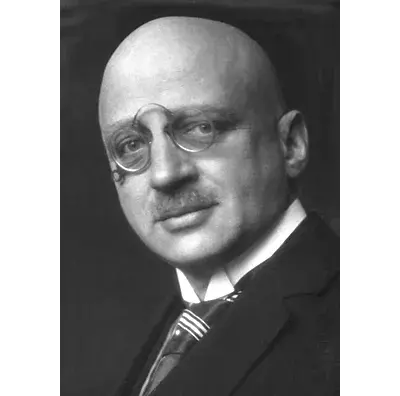
Fritz Haber was a German chemist who received the Nobel Prize in Chemistry in 1918 for his invention of the Haber–Bosch process, a method used in industry to synthesize ammonia from nitrogen gas and hydrogen gas. This invention is of importance for the large-scale synthesis of fertilizers and explosives. It is estimated that two thirds of annual global food production uses nitrogen from the Haber-Bosch process, and that this supports nearly half the world population. Haber, along with Max Born, proposed the Born–Haber cycle as a method for evaluating the lattice energy of an ionic solid.
