William Rehnquist Quotes
The framers of our Constitution came up with two major contributions to the art of government. The first was the idea of an executive not dependent on the political support of the legislature. The second was the idea of the judiciary independent of the executive and legislative branches.
William Rehnquist, 1924-2005, Chief Justice, U. S. Supreme Court, Statement before the National Commission on Public Service, July 15, 2002
Sourced by: Eigen's Political and Historical Quotations


This constitution was written 7 years before the national constitutional convention. It shows that there was concern about the separation of powers in United States even before the Constitution was drafted. See {616750} for an even clearer statement of the separation of powers principle.


Ironically three decades later Wilson got tangled up with Congress over the League of Nations. He had forgotten what he had written about how Congress having supremacy over the Presidency.


The view that the Supreme Court was the final arbiter of constitutional controversies was not held in early America.


Hatch was the chairman of the Senate Judiciary Committee at the time.


There was much argument over the desired relative strength and power of the three branches of government. Wilson suggested equality. We argue about it to this day.


This letter was written shortly after the Constitution had been signed by the convention delegates. This difference between Adams and Jefferson would be at the heart of the first great partisan struggle in American history. Adams, as the second President, tried to increase and use the power of the Presidency. Jefferson opposed him, especially when Adams tried to run for a second term. The Adams-led Federalists were pitted against Jefferson’s Democratic Republicans in the first, and perhaps still the most bitter partisan struggle in American political history. The Jeffersonians accused Adams and the Federalists of trying to unravel the American Revolution and revert to a monarchy. The people not only sided with the Democratic Republicans, ousting Adams, but also turned out most of the Federalists. It was the end of the Federalist Party, and a new conservative party—without monarchial tendencies—the Whigs became the new opposition party.

The “departments” refer the 3 branches of government: executive, legislative, and judiciary. The basic principle of the separation of powers (See {607920}) was fundamental to the state representatives at the 1787 Constitutional Convention, even though none of their state constitutions had accepted that principle.
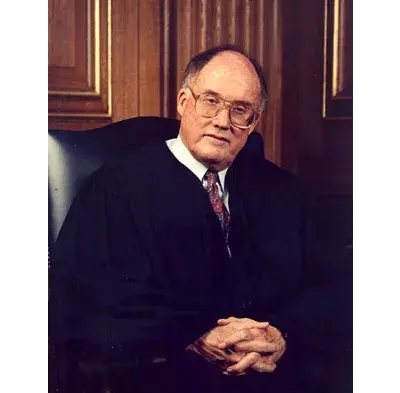
William Hubbs Rehnquist was an American lawyer and jurist who served on the Supreme Court of the United States for 33 years, as an associate justice from 1972 to 1986 and as Chief Justice from 1986 until his death in 2005. Considered a conservative, Rehnquist favored a conception of federalism that emphasized the Tenth Amendment's reservation of powers to the states. Under this view of federalism, the court, for the first time since the 1930s, struck down an act of Congress as exceeding its power under the Commerce Clause.
