William Rehnquist Quotes
It is always possible for the court to overreach its proper bounds and perhaps declare a lot of laws unconstitutional and frustrate the will of the majority in a way that it ought not be frustrated.
Rehnquist, William H. Interview by Brian Lamb. Booknotes, C-SPAN, 21 June 1992.


The Roosevelt administration had stemmed the tide of Hoover’s Great Depression but the nation had not yet recovered. The New Deal measures, most of which would be considered fundamental to good government 50 years later was being constantly thwarted by a Supreme Court with a strong arch conservative majority headed by James McReynolds, a virulent, overt, anti-Semitic racist, who hated FDR—see {616652} and {585241}. The situation was to many like that which existed before the Civil War when the Court rendered the Dred Scott decision that so harmed the nation. Frankfurter, not then a Supreme Court Justice, urged Roosevelt to do something lest the American Public lose all respect for the Court and our Constitutional system and have the nation harmed by not allowing reforms like child labor laws to go through. The court actually ruled by a narrow majority that the government could not pass laws making it illegal for 11 year old children to work in coal mines or factories. FDR attempted to add more justices turning the majority into a majority—“packing the Supreme Court”, but that politically backfired. Some of the reforms never went through while others needed Constitutional Amendments like the end to Prohibition.


In 2002 the corrupt Indonesian Courts ruled that a very solvent Canadian company Manulife was bankrupt so that others could get control. The international financial and political community wanted the Indonesian government to intervene and reverse the rulings, but historically the courts had no independence and had been tools of the government.

Jefferson’s fears were later reinforced by John Marshall in Marbury v. Madison {606468}


Originally it was published in Boston under the name “A Columbian Patriot.”

Hatch was the chairman of the Senate Judiciary Committee at the time.

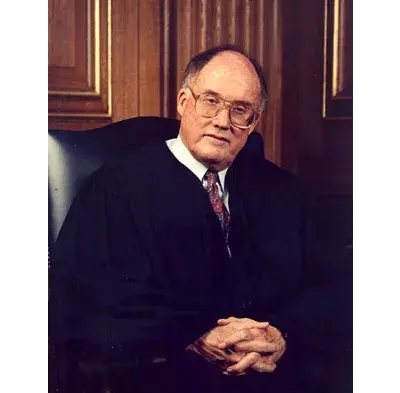
William Hubbs Rehnquist was an American lawyer and jurist who served on the Supreme Court of the United States for 33 years, as an associate justice from 1972 to 1986 and as Chief Justice from 1986 until his death in 2005. Considered a conservative, Rehnquist favored a conception of federalism that emphasized the Tenth Amendment's reservation of powers to the states. Under this view of federalism, the court, for the first time since the 1930s, struck down an act of Congress as exceeding its power under the Commerce Clause.
