Karl Marx Quotes
[Napoleon] swept away everywhere the establishments of feudality. ... [He was] Caesar himself.
Marx, Karl. The Eighteenth Brumaire of Louis Bonaparte. Translated by Daniel De Leon, Charles H. Kerr & Company, 1907, p. 10.


Debs was jailed for sedition for this speech.

He was executed for rebellion at age 29. However, a number of his followers went on to leadership positions in the reforms that followed. The Shogun was the military ruler of the country subject only to the Emperor. In the logic of Japan at the time one could call for revolution against the Shogun and not be disloyal to the Emperor.


Cities operated on an entirely different plane than the rural countryside which was divided up and given to nobles and the peasants on the land were serfs—virtual slaves to the noble. Cities allowed more equality, opportunity, freedom, modernity, and education. However, serfs would vote with their feet and move into cities leaving the princes devoid of their surf labor. The Emperor tried to stave off this trend by preventing the cities from admitting the surfs who were otherwise generally welcome as they, like immigrants classically provided an excellent source of compliant, low cost labor. Ironically, there are third world countries who even in modern times are trying to restrict the immigration of peasants to the cities.


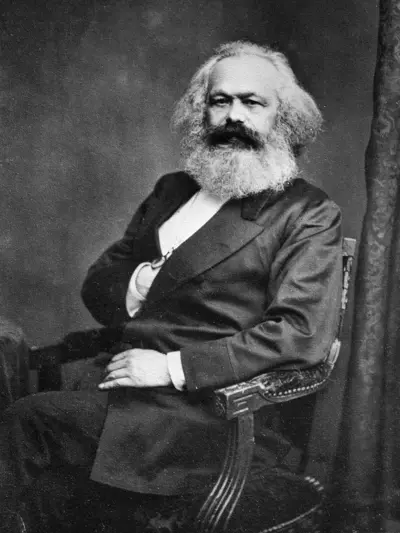
Karl Heinrich Marx was a German philosopher, economist, historian, sociologist, political theorist, journalist and socialist revolutionary. Born in Trier, Germany, Marx studied law and philosophy at university. He married Jenny von Westphalen in 1843. Due to his political publications, Marx became stateless and lived in exile with his wife and children in London for decades, where he continued to develop his thought in collaboration with German thinker Friedrich Engels and publish his writings, researching in the reading room of the British Museum. His best-known titles are the 1848 pamphlet The Communist Manifesto and the three-volume Das Kapital (1867–1883). Marx's political and philosophical thought had enormous influence on subsequent intellectual, economic and political history. His name has been used as an adjective, a noun, and a school of social theory.
