Sabine Baring-Gould Quotes
At the Norman Invasion, the Saxon thanes were themselves humbled in turn; the manors were given a more legal character and transferred to favourites of William the Conqueror.
Baring-Gould, Sabine. An Old English Home and Its Dependencies. Methuen & Co., 1898, p. 15.

Cities operated on an entirely different plane than the rural countryside which was divided up and given to nobles and the peasants on the land were serfs—virtual slaves to the noble. Cities allowed more equality, opportunity, freedom, modernity, and education. However, serfs would vote with their feet and move into cities leaving the princes devoid of their surf labor. The Emperor tried to stave off this trend by preventing the cities from admitting the surfs who were otherwise generally welcome as they, like immigrants classically provided an excellent source of compliant, low cost labor. Ironically, there are third world countries who even in modern times are trying to restrict the immigration of peasants to the cities.


Debs was jailed for sedition for this speech.


This is one of the best examples of the Mongol Terror Tactics. They had a completely mobile fighting force. They could evade any large army and attack fixed towns and villages, while opponents could not defend all the locations without enormous expense. The calculus was often that it was cheaper to pay the Mongols tribute than it was to even beat them in the field. In this case, the Hungarians settled and a Mongol satellite group—the Cumans (Western Kipchaks)—moved into Hungary and have been a minority there ever since.

A fief was an estate of land and people. The man who had the title to the fief was obligated to raise troops from his estates and lead then at the command of the King. Women, under English law could not inherit a fief—it went to the oldest son. However, once the military element of fiefdom was eliminated, Johnson saw no reason why women should no longer inherit feifs and the titles that went with them.


William the Conqueror
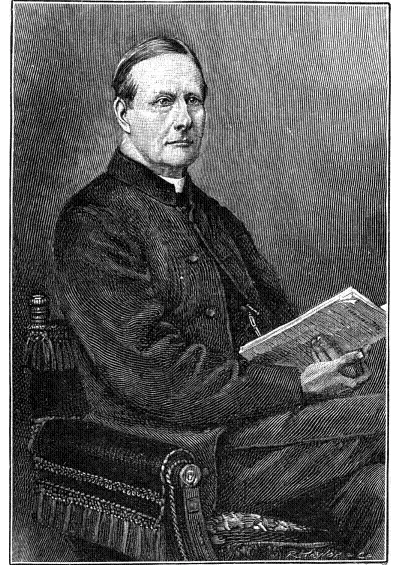
The Reverend Sabine Baring-Gould of Lew Trenchard in Devon, England, was an Anglican priest, hagiographer, antiquarian, novelist, folk song collector and eclectic scholar. His bibliography consists of more than 1,240 publications, though this list continues to grow. His family home, the manor house of Lew Trenchard, near Okehampton, Devon, has been preserved as he had it rebuilt and is now a hotel. He is remembered particularly as a writer of hymns, the best-known being "Onward, Christian Soldiers", "Sing Lullaby", and "Now the Day Is Over". He also translated the carol "Gabriel's Message" from the Basque language to English.
