Caleb Cushing Quotes
The Normans came over, lance in hand, burning and trampling down every thing before them, and cutting off the Saxon dynasty and the Saxon nobles at the edge of the sword; but the right of petition remained untouched.
Cushing, Caleb. Speech of Mr. Cushing, of Massachusetts, on the Right of Petition, as Connected with Petitions for the Abolition of Slavery and the Slave Trade in the District of Columbia: In the House of Representatives, January 25, 1836. Gales and Seaton, 1836, p. 6.


Cities operated on an entirely different plane than the rural countryside which was divided up and given to nobles and the peasants on the land were serfs—virtual slaves to the noble. Cities allowed more equality, opportunity, freedom, modernity, and education. However, serfs would vote with their feet and move into cities leaving the princes devoid of their surf labor. The Emperor tried to stave off this trend by preventing the cities from admitting the surfs who were otherwise generally welcome as they, like immigrants classically provided an excellent source of compliant, low cost labor. Ironically, there are third world countries who even in modern times are trying to restrict the immigration of peasants to the cities.


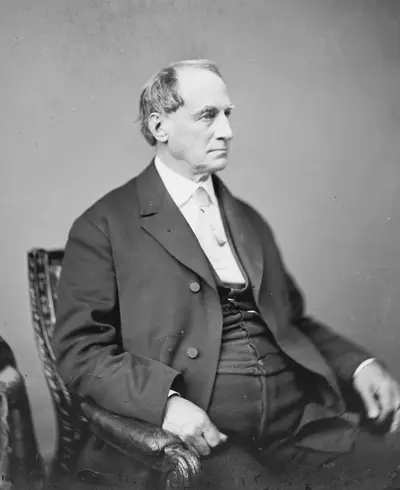
Caleb Cushing was an American Democratic politician and diplomat who served as a Congressman from Massachusetts and Attorney General under President Franklin Pierce. He was an eager proponent of territorial and commercial expansion, especially regarding the acquisition of Texas, Oregon and Cuba. He believed that enlarging the American sphere would fulfill "the great destiny reserved for this exemplar American Republic." Cushing secured the first American treaty with China, the Treaty of Wangxia of 1844; it gave American merchants trading rights in five Chinese ports. After the Civil War, Cushing negotiated a treaty with Colombia to give the United States a right-of-way for a trans-oceanic Canal. He helped obtain a favorable settlement of the Alabama Claims, and as the ambassador to Spain in 1870s defused the troublesome Virginius Affair.
