Horace Austin Quotes
Must we not first take the government of Mexico in hand, either to establish a protectorate over the country, or by undertaking to give the [Mexican] President a Military Support that will insure domestic tranquility and a due regards for the rights of foreigners.
Horace Austin, *, Governor of Minnesota, Letter to William Stark Rosecrans, U. S. Ambassador to Mexico, April 2, 1870
Sourced by: Eigen's Political and Historical Quotations

England in this quotation claims the right to interfere in the internal affairs of another nation if there is mismanagement or crises AND her national interests are affected.

See {640521} for the trigger of his anger. This is a good example of a politician using indiscreet hyperbolic terms in anger. In a different time, the President might have been accused of planning extermination and genocide of the Cuban people.


What makes this quotation important is that the Central Intelligence Agency disobeyed the order and implemented a number of covert operations in Indonesia and CIA Director Alan Dulles did not tell the President. See {634612} for his rationale.

Most of her modern admirers tend to repress this quotation which is very embarrassing for most modern conservatives. However, there is a minority of thinkers who maintain that land, unused, is open to anyone who will make use of it to improve civilization. Many conservationists, in contrast, extol unused land for preservation.


The basic treaty sold some of Ethiopia’s colonial territory (Eritrea and Tigray) to Italy in exchange for arms. Italy had tried to conquer the area but lost 500 men in the Battle of Dogali. However, after this peace treaty, Italy maintained that Article 17 of the treaty gave them the right to declare Ethiopia an Italian Protectorate which they did. However, there were two different versions of the treaty that the Italians had drawn up—one in Italian, the other in Aramaic. Britain, Belgium and Germany supported Italy; France, Turkey and Russia supported Ethiopia. Menelik then, to make matters clear, repudiated the treaty in 1893. Italy send an invasion force that was soundly thrashed by the Ethiopians setting the stage for the Italian attack on Ethiopia in World War II years later. Parties to International treaties thereafter have paid close attention to the different language versions.


Mexico was in a chaotic state with the central government not able to control the countries, especially in the North. There were numerous American proposals like this one. See {596782}.

Buchanan was then Secretary of State.

The Mexicans had to agree to whatever terms the United States demanded. President Polk wanted to annex California and the New Mexico territory (included Arizona) as well as other territory including Baja—a territory much larger than Western Europe. Trist watered down the demand and only included California and the New Mexico territory.

Despite the fact that there were no formal political polls at the time, public opinion was very influential in curtailing what might be a tendency to use of the American military. Starting with the Cold War later, Presidents tended to use American military force regardless of public opinion or would exaggerate or lie (Vietnam and Iraq wars for example) to temporally gain some public support.


The “proofs” were diplomatic assurances—treaties—that England would guarantee the territorial integrity of Belgium. The British made strong diplomatic efforts to persuade Germany not to occupy Belgium. The German’s none the less send armies in under the excuse that if they did not, the French would occupy the country and have a strategic advantage over them. Diplomacy could do no more good. England had to send troops or renege on its obligations. So England was in WWI.


Dulles lied to Congress. The CIA at the time was supplying planes and American pilots in support of an anti-Sukarno Government faction that was in armed revolt. It is not clear whether or not Dulles knew the truth when he had so testified.
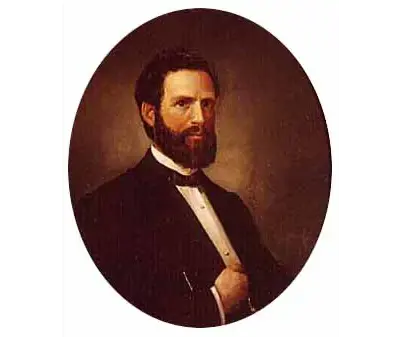
Horace Austin was an American politician. He served as the sixth Governor of Minnesota from January 9, 1870 to January 7, 1874. He was a Republican.
