Cole Younger Quotes
Joe Smith and Brigham Young laid out Independence, but very soon thereafter enough citizens of the county collected to drive them off, after several stubborn fights.
Buel, J. W. The Border Outlaws. Historical Publishing Company, 1881.


Churchill was reported to be so angry and exasperated that his face turned red and he was sputtering. During World War II, Gandhi, Nehru and other Indian Nationalists were leading protests against British control of India. This not only bogged down British soldiers surprising the nationalists rather than fighting in Burma or in other war theaters, but India supplied a huge number of battalions to the British Army the world over and if that manpower dried up, the allied war effort would suffer. The American State Department wanted Churchill to announce that after Japan was defeated, there would be a process toward self-government. This way, they thought, the Indians would redouble their effort to defeat the Japanese and stop the then current protests and strikes. Churchill was strongly opposed to any diminution of the British Empire, but beyond that, he knew India quite well and realized that at any hint of Independence the large Muslim minority in India would insist on autonomy or a partition of the country and use sectarian violence and terror to intimidate the Indian Congress party and the British, but the major victims of the terror—the Hindus and the Sikhs would not remain passive, but would retaliate in kind. President Roosevelt was in the midst of planning the Normandy Landings of the D-Day invasion and did not want to pressure Churchill and the British at this point in time, so the door to independence was not opened during the war and Britain had to deal with the protests throughout. However, when, after the war, the Labor Government, started a process toward Indian independence which resulted in exactly what Churchill predicted. At least 2 million Indians were slaughtered in the internecine terrorist cycles of fear and retaliation motivated terror attacks what were so extensive that the British military could not really control it.


The railroads that opened up the West are often used as examples of American corporate and entrepreneurial achievement. But private enterprise would not risk the capital for such a visionary and innovative scheme. It was the Federal Government which provided loans to start and paid for every mile of track with huge grants of land along the right of way. Then the Federal government provided the security and conducted numerous wars against the Indians to make the construction and operation possible. Had the Government and President Lincoln not pushed and supported the plan, there would have been no transcontinental railroad.


The Mormons, not unlike other whites at the time, in effect invaded the Indians’ land, and took possession. At first the Mormons tried to convert the Indians and when the Indians preferred their own religion, there was constant occupation of Indian land in the Salt Lake Valley.

A very passionate minority of India’s Muslims demanded a separate Islamic State (what would become Pakistan) but Hindu’s and Muslims were mixed throughout India and many Indians and British were concerned that there would be a bloodbath if the plans for independence went forward. Gandhi desperately tried to avoid violence but thought that independence was so important that the sectarian violence should not be an excuse for continued British rule. Unfortunately, millions of Indians were killed in the riots and ethnic cleansing and revenge that followed independence. Since then there has been much second guessing on how else the situation might have been handled.
The culture of Iraq and the Desert tribes made raiding and looting of other villages or travelers or caravans a way of life. The British occupiers were determined to put an end to it and Harris, a young officer, developed the retaliation of bombing the village of the raiders and their warlords. This appears to be the beginning of destroying of houses in the Middle East as a method of retaliation and punishment which would be adopted so well by the Israelis as a humane method and they often quoted Harris saying: “we put them to the maximum amount of inconvenience, without physical hurt, and they soon stopped their raiding and looting.”


A part of this quotation is very often taken out of context by just quoting the phrase “prosecution of an exterminating war” implying that Lamar was urging genocide. However, the war was urged only if the Indians did not cease their raids and massacres. Further, he specifically excludes women and children from the “extinction”. In addition he holds out the option of forced “total expulsion” if the raids continue. Brutal his threats were. And given that the whites were taking the Indians traditional lands it is easy to see where there were reasons for Indian resistance to white expansion. However, there was another reason that Lamar and most of the white settlers wanted the Indians expelled: They wanted the land.


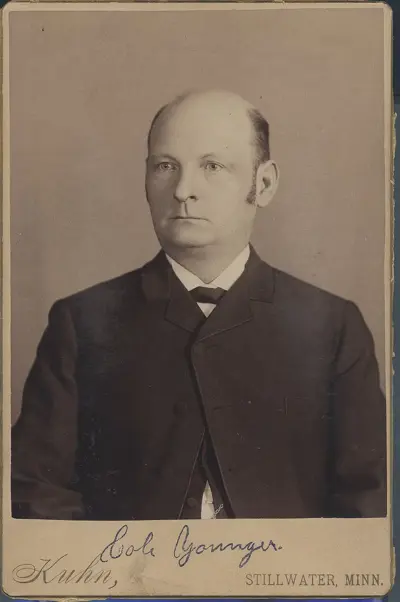
Thomas Coleman Younger was an American Confederate guerrilla during the American Civil War and later an outlaw leader with the James–Younger Gang. He was the elder brother of Jim, John and Bob Younger, who were also members of the gang.
