Frederick Jackson Turner Quotes
Railroads, fostered by government loans and land grants, opened the way for settlement and poured a flood of European immigrants and restless pioneers from all sections of the Union into the government lands. The army of the United States pushed back the Indian
The railroads that opened up the West are often used as examples of American corporate and entrepreneurial achievement. But private enterprise would not risk the capital for such a visionary and innovative scheme. It was the Federal Government which provided loans to start and paid for every mile of track with huge grants of land along the right of way. Then the Federal government provided the security and conducted numerous wars against the Indians to make the construction and operation possible. Had the Government and President Lincoln not pushed and supported the plan, there would have been no transcontinental railroad.
Frederick Jackson Turner, 1861–1932, Historian, “The Problem Of The West”, The Atlantic Monthly, September 1896
Sourced by: Eigen's Political and Historical Quotations


Wayne played so many parts depicting whites in the process of expanding Westward that many people saw him as an expert on the history of the Westward Expansion. He did not comment on the whites who then kept huge ranches “selfishly” for themselves or those who selfishly would not share the mineral rich land that they had taken with anyone including the original Indian owners. So in this view, the Indians should have not been capitalists but they should have been socialists and shared their resources.

Jackson’s policies regarding Indians set back all the work of the earlier Presidents and created facts on the ground and attitudes that vex us to this day. In this occasion he said very forthrightly that it was his intention to deny Indians title to ANY land in the then United States. His idea was to send all the Indians to the Oklahoma Indian Territory and establish reservations for them there. Of course, as the Western states joined the Union, the Whites wanted those Indian Lands as well. See {643150} for other Jackson views on Indian policy.


This quotation illustrates the racist view of Native Americans that prevailed at the time. The Mexican government invited settlers and would give then the Indian lands. In addition to Mexicans who came to Texas, many Americans also went to Texas, changing their citizenship to Mexico. Later, they banded together and broke from Mexico and Joined the United States. The Indians lost most of their lands.

While the economics of land is described accurately, immigrants from most of the world would never in their home country ever be able to earn enough in a few years to acquire that much land. So the prospect of land ownership was a fundamental selling point and was a major spur to immigration to America where land was and is plentiful.


Gustav II Adolph. The colony would also exclude slavery, and to make a home for the oppressed of all Christendom. Essentially this was the first plan for multicultural diversification of American immigration. The 30 Years War put the project on hold until after the king’s death and it was not until 1638 that Swedish ships sailed for what they called “New Sweden” landing at Wilmington, Delaware, calling it Christina.
The economic development contribution of military spending is not new and not limited to today’s military bases and defense contracts and plants. See {623902} for Sheridan’s famous prediction.

The meeting included several Indians, President Grant, and the Secretary of the Interior and the Director of the Bureau of Indian Affairs. The Indians had been offered $25,000 and land in the Oklahoma Indian Territory in exchange for moving from their traditional lands.


Most of her modern admirers tend to repress this quotation which is very embarrassing for most modern conservatives. However, there is a minority of thinkers who maintain that land, unused, is open to anyone who will make use of it to improve civilization. Many conservationists, in contrast, extol unused land for preservation.


His Indian Removal Policy forced Native American to leave their lands which were theirs by treaties signed by the United States and marched to the poorest land in Oklahoma where they were "resettled". This is often referred to as the "Trail of Tears". What made his actions evern wors was the fact that The Supreme Court had already ruled that such land belinged to the Cherokee Indian Tribe and the government of the United States may not force them from it. Jackson was the only President in Amrican History to defy a Supreme Court order.
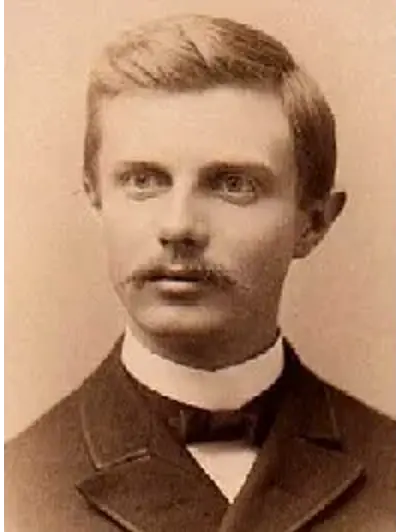
Frederick Jackson Turner was an American historian during the early 20th century, based at the University of Wisconsin until 1910, and then Harvard University. He was known primarily for his anti-Indigenous "Frontier Thesis". He trained many PhDs who became well-known historians. He promoted interdisciplinary and quantitative methods, often with an emphasis on the Midwest. His best known publication is his essay "The Significance of the Frontier in American History", the ideas of which formed the Frontier Thesis. He argued that the moving western frontier exerted a strong influence on American democracy and the American character from the colonial era until 1890. He is also known for his theories of geographical sectionalism. During recent years historians and academics have argued frequently over Turner's work; all agree that the Frontier Thesis has had an enormous effect on historical scholarship.
