Peter Agre Quotes
In 1862, Abraham Lincoln signed the Homestead Act, a bill opening one half million square miles of territory in the western United States for settlement.
Agre, Peter. "Peter Agre - Biographical." Les Prix Nobel. The Nobel Prizes 2003, edited by Tore Frängsmyr, Nobel Foundation, 2004.


The railroads that opened up the West are often used as examples of American corporate and entrepreneurial achievement. But private enterprise would not risk the capital for such a visionary and innovative scheme. It was the Federal Government which provided loans to start and paid for every mile of track with huge grants of land along the right of way. Then the Federal government provided the security and conducted numerous wars against the Indians to make the construction and operation possible. Had the Government and President Lincoln not pushed and supported the plan, there would have been no transcontinental railroad.


This quotation illustrates the racist view of Native Americans that prevailed at the time. The Mexican government invited settlers and would give then the Indian lands. In addition to Mexicans who came to Texas, many Americans also went to Texas, changing their citizenship to Mexico. Later, they banded together and broke from Mexico and Joined the United States. The Indians lost most of their lands.

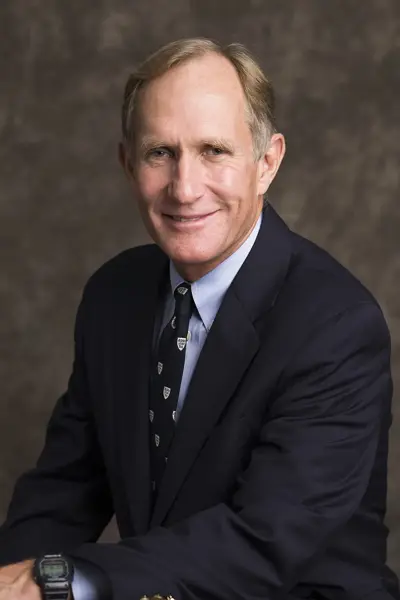
Peter Agre /ˈɑːɡriː/ is an American physician, Nobel Laureate, and molecular biologist, Bloomberg Distinguished Professor at the Johns Hopkins Bloomberg School of Public Health and Johns Hopkins School of Medicine, and director of the Johns Hopkins Malaria Research Institute. In 2003, Agre and Roderick MacKinnon shared the 2003 Nobel Prize in Chemistry for "discoveries concerning channels in cell membranes." Agre was recognized for his discovery of aquaporin water channels. Aquaporins are water-channel proteins that move water molecules through the cell membrane. In 2009, Agre was elected president of the American Association for the Advancement of Science (AAAS) and became active in science diplomacy.
