Frederick Jackson Turner Quotes
Free lands and the consciousness of working out their social destiny did more than turn the Westerner to material interests and devote him to a restless existence. They promoted equality among the Western settlers, and reacted as a check on the aristocratic influences of the East.
Frederick Jackson Turner, 1861–1932, Historian, “The Problem Of The West”, The Atlantic Monthly, September 1896
Sourced by: Eigen's Political and Historical Quotations


The word “proprietor” at the time meant someone who had title to land. The title was then almost always tied up with the aristocratic titles. “Great proprietors” were therefore nobles who owned and controlled large land holdings. The “improvers” tended to be the businessmen—especially the manufacturers and the transportation magnates. Large landowners could just make money by renting parts of their land to tenant farmers. They needed no capital, no vision, not much skill or talent, and they didn’t have to take any risks.
The railroads that opened up the West are often used as examples of American corporate and entrepreneurial achievement. But private enterprise would not risk the capital for such a visionary and innovative scheme. It was the Federal Government which provided loans to start and paid for every mile of track with huge grants of land along the right of way. Then the Federal government provided the security and conducted numerous wars against the Indians to make the construction and operation possible. Had the Government and President Lincoln not pushed and supported the plan, there would have been no transcontinental railroad.


Marie Joseph Paul Yves Roch Gilbert du Motier

This was one of the first scholarly analysis of the history, psychology, and culture of the American Western Frontiersman. It is still considered one of the best.

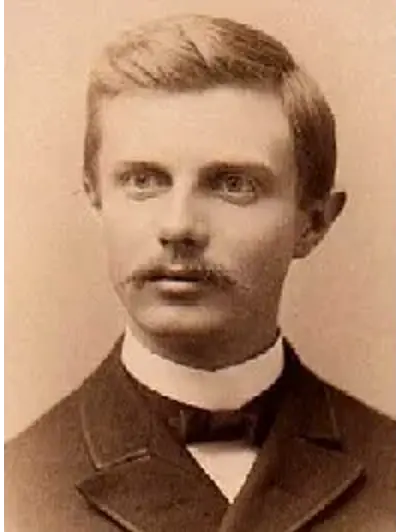
Frederick Jackson Turner was an American historian during the early 20th century, based at the University of Wisconsin until 1910, and then Harvard University. He was known primarily for his anti-Indigenous "Frontier Thesis". He trained many PhDs who became well-known historians. He promoted interdisciplinary and quantitative methods, often with an emphasis on the Midwest. His best known publication is his essay "The Significance of the Frontier in American History", the ideas of which formed the Frontier Thesis. He argued that the moving western frontier exerted a strong influence on American democracy and the American character from the colonial era until 1890. He is also known for his theories of geographical sectionalism. During recent years historians and academics have argued frequently over Turner's work; all agree that the Frontier Thesis has had an enormous effect on historical scholarship.
