Eddie Slovik Quotes
I've made up my mind. I'll take my court martial.
Huie, William Bradford. The Execution of Private Slovik. Duell, Sloan and Pearce, 1954.


Rush ran the hospitals for the Revolutionary Army and talked to many officers and enlisted men, and also observed much of the British military practices. These suggestions were discussed but never passed as regulations. They are fascinating insights into the problems of the general officers of the time who were generally selected for their socioeconomic status rather than other qualifications. Note the drunkenness limitation for a commanding general was proposed to be limited to only 1 allowed bout of drunkenness every 24 hours. It was, he thought, totally unrealistic to require generals to be always sober when on duty. With the mediocre quality of senior officers, Washington had to depend on foreigners like Lafayette, Von Steuben and others. And Generals who were leading attacks out in front of their men like Benedict Arnold immediately became heroes and one of the reasons he ended up as a traitor was that he thought that he was badly treated relative to the “society” Generals who would not accept him and denigrated his exploits when they themselves had never been close to a battle front.


History is replete with instances of military coups. In the final analysis, in every country at all times, there is no force in a society that could cope with a military which decides to act on its own. The Founding Fathers were very conscious of this reality and history, hence the firm civilian control of the military in America.

The Attorney General had taken the position that the Congress could not pass laws in time of war that the President was required to follow if in his judgment as Commander in Chief, the war effort and safety of the nation was at stake—that he could instruct the military to ignore laws passed by Congress. The legal theory of the George W. Bush administration was that the President had “inherent powers” under the Constitution and that Congress could not supersede these by legislation.


In the Iraq and Afghanistan Wars, private contractors wlere hired to provide many services in the war zone including intelligence, security and guard service. In carrying out their responsibilities, some private contractor employees killed and/or tortured suspects or innocent bystandarders against the laws of the United States. If American soldiers had committed these crimes, they would be court marshalled. However, the Code of Military Regulations and other laws applied only to armed forces personnel.


This is a very important quotation historically. There are a few historians and many politicians who claim that the rebellion of the South in the Civil War was motivated by a number of principles having little or nothing to do with slavery, while most historians have found that slavery was the only major issue. This quote further supports that view. This is the only Union General Officer would be executed if captured by the South. What crimes did he perform to warrant such exceptional treatment? He issued an order Emancipating the Slaves of the Southern Department of which he was the Commanding General. See {619331} . Lincoln quickly countermanded the order, but the act of freeing slaves was to the Southern government so heinous that it deserved the death penalty.

This has always been a problem for the US Military. Attempts at prohibition have been bad for morale, and there is a cultural tradition that military men drink alcohol. However in the Gulf War, our military men and women stationed in Saudi Arabia could not drink as a consequence of the Islamic prohibition of alcohol in Saudi Arabia. There has never been, in the history of our military a period with fewer courts martials, and discipline problems in general. Very few assaults, rapes and murders.


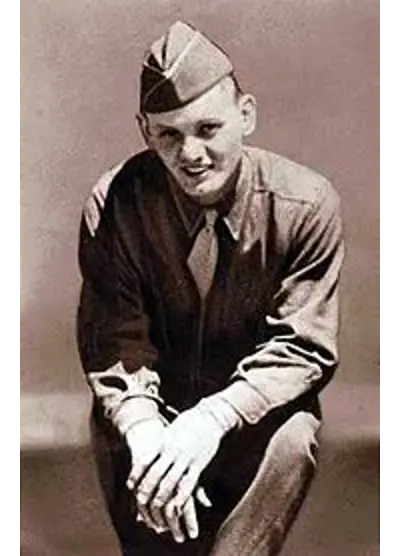
Edward Donald Slovik was a United States Army soldier during World War II and the only American soldier to be court-martialled and executed for desertion since the American Civil War. Although over 21,000 American soldiers were given varying sentences for desertion during World War II, including 49 death sentences, Slovik's death sentence was the only one that was carried out.
