Casey Stengel Quotes
If you're so smart, let's see you get out of the Army.
Appel, Marty. Casey Stengel: Baseball's Greatest Character. Doubleday, 2017.


Shortly after Henry Morgenthau had become Secretary of the Treasury he held a press conference. A veteran reporter asked him very difficult, detailed technical financial questions which the Secretary had not been exposed to. He observed of the reporter, "You must be new here."


Miles, a hero of the Indian Campaigns (although he led the atrocities at the massacre at Wounded Knee) and then the leading military figure in America was an opponent of the policies of the new young President and had political aspirations of his own for the Presidency. Miles’ opinions were printed in the press. He maintained that he was not speaking as the Commanding General of the Army but personally as a citizen. The President surprised almost all by publicly scolding and reprimanding Miles when he next came to the White House. Five days later Roosevelt made the reprimand official, effectively ending Miles career. The issue of when senior military officers can criticize the administration has been debated ever since. Roosevelt was also a war hero himself, and although the military was shocked by such “savage” treatment of a senior officer, the President had public opinion on his side. Every decade or so there is a military official who does not care for the administration’s policies and expresses himself publicly. President Truman’s firing to General Douglas Macarthur was the most dramatic case, but Truman was well aware of the Miles and TR precedent.


When approached by a party official about an appointment:

The actress was in Jordan and was requested for a command performance before King Hussein. She was told to curtsey when she was introduced to the King.

Holmes was a young soldier at the battle. This quote is also sometimes attributed to General Horatio Wright, who was present at the battle and actually got the President down to safety, but we regard it as unlikely that a sophisticated, mature general would have addressed the President so rudely

Monroe was then Secretary of State and the U. S. was at war.

Theoretically every male citizen was supposed to serve in the Militia at that time. But if one did not, the penalty was a small fine. It became a status symbol. Those middle and upper class men who could get commissions as officers would serve, but those who did not have the political connections or the money to equip his own troops, would rather pay the fine than serve with men he thought beneath him. There is a , romantic American myth about the Militiamen in Colonial and Revolutionary America—the citizen soldiers who would leave their farms and rise to the military necessity of the day. However, not only were the militia very hard to muster to duty, but most actually didn’t own or have experience with firearms, and the prevailing opinion of knowledgeable military leaders from George Washington on down was that the militia were not very good soldiers. See {613015}, {613016}, {613022}, {613027}, {621987}, {621988}, {613030}, {613033}, & {613056}
While most modern armies treat officers and enlisted men who desert equally or even favor the officers, the Visigoths made desertion by an officer the severest of crimes. A centurion was the officer in charge of 100 men. There were 10 decurians (leaders of 10) under him, They were the modern equivalent of the Sergeants—non-commissioned officers. Their penalty for desertion was only the paying of a heavy fine. It was the officers who had to set the example. This set of laws is the most formalized and sophisticated compendium of laws of the so-called “barbaric peoples” of Europe. The compilation was in many ways a documentation of the traditional laws of the Visigoths that had evolved over hundreds of years.

The administration had alleged that the public disclosure of the Pentagon Papers would harm national security. The material was sent to the Solicitor General to prepare the case for the Supreme Court injunction hearing the next day. It was delivered by a senior FBI agent whose responsibility was to guard and protect the secrecy of the material. When the Solicitor General started dictating notes to his secretary, the FBI agent told him that would not be permissible as she did not have a high enough clearance.
The fire turned out to be The Great Fire of London which burned most of the city to the ground. Bludworth’s inaction and indecision are blamed as one of the reasons the fire got out of control.

Moyers was also an ordained Baptist Minister. At a White House dinner, Moyers was asked to say grace. He did so in a soft and reverent voice. President Johnson, seated far away, and not hearing Moyers words clearly said in a loud voice, “Speak up, Bill. Speak up.” Moyer’s response followed.

Kleinst, one of the guilty war criminals, is here quoted with the defense that most Nazi war criminals uses—namely that they were obeying orders. But international law makes no distinction between military and political orders, and it is the obligation of a soldier to refuse to obey an illegal military order and the orders he obeyed were illegal and contrary to International law—an order to kill babies and young children can never be legal for example.
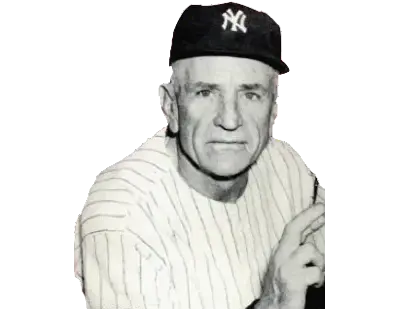
Charles Dillon "Casey" Stengel was an American Major League Baseball right fielder and manager, best known as the manager of the championship New York Yankees of the 1950s and later, the expansion New York Mets. He was elected to the Baseball Hall of Fame in 1966.
