Jon Meacham Quotes
In the Bay of Pigs, President Kennedy learned that the Generals are not always right.
Jon Meacham, Historian & Managing Editor, Newsweek, CNN Global Public Square, November 25, 2012
Sourced by: Eigen's Political and Historical Quotations


Kennedy was a relatively new president and the Bay of Pigs Operation was prepared and planned by the CIA under the Eisenhower Administration. The president assumed that the intelligence was correct and there would be an uprising of the Cuban people when as soon as the landing took place. That was all wrong and the Cubans actually supported Castro and the operation was a disaster. Kennedy never trusted the CIA after that.

Johnson tasked Clark with finding out what the FBI knew of this story. The story was true. Worse, the CIA had hired members of the Mafia to do the assassination. (The Mafia resented Castro as he ended the Gambling Mecca that Cuba had been when his revolution succeeded. Before the Castro revolution, he Mafia got a “piece” of the profits from each Cuban casino for “protection.”) It might have been that the Kennedy Assassination was retaliation by Castro. However, the CIA withheld this from the Warren Commission and Robert Kennedy never revealed it even though he was a member of the Commission and the Commission had security clearance. See {637465}.

See {637464} for the trigger for the FBI to write this report. It was the report that verified that the CIA had hired the Mafia to assassinate Fidel Castro which President Johnson had heard but the CIA never revealed it to Johnson or the Warren Commission investigations JFK’s assassination. The full document was kept secret and was not yet declassified in 2014 when this quotation was entered in the collection.

talks toward normalizing relations with Cuba One of the many alternative theories about the assassination of President Kennedy, was that it was done by fanatic Cubans who resented Kennedy for not sending more military assets to support the Bay of Pigs operation, for not supporting the Cuban militants to make another invasion attempt. If they had found out that Kennedy was secretly negotiating with Castro, they would have seen this as a betrayal. Attwood had secretly met with the Cuban Government Representatives and was to have briefed President Kennedy, but the president was assassinated first. His death ended the mission to normalize Cuban relations, so if that was the motivation for an assassination, the Cuban exiles might have been successful in derailing relations with Cuba. However, there has been no direct evidence found for this speculative theory.
The Bay of Pigs
The Bay of Pigs


Dulles was a master at manipulating presidents. Instead of just presenting his Bay of Pigs plan to Kennedy and assuring him of his belief in its likely success, Dulles brought in the comparison with Eisenhower, a great general with extensive foreign policy experience. If Ike would give the go ahead with a lesser success probability plan, then it showed the confidence that Eisenhower had in Dulles and the Central Intelligence Agency staff. If Kennedy were to kill the Bay of Pigs plan, then either he did not have the courage that Ike had or he was substituting his military judgment for Eisenhower’s. Kennedy approved the operation which was a terrible example of military planning. Kennedy, after the Bay of Pigs Debacle, never again had great confidence in the professional military and espionage. Many political scientists and historians credit this negative experience with the Bay of Pigs with giving Kennedy the confidence to not follow the recommendations of the leading military and intelligence staff when faced with the Cuban Missile Crises—even when members of the Joint Chief’s of Staff (Curtis LeMay was the most forceful) told him unequivocally that his failure to act more forcefully would likely weaken if not destroy the independence of the country. President Kennedy and his brother, Bobby, took a much more proactive role in the Missile Crises than they did in the Bay of Pigs.

This was one of the great blunders of the Central Intelligence Agency in American History. As the Central Intelligence Agency was writing this report the Russians were landing missile components in Cuba. Within days the Cuban Missile Crisis would erupt. The Central Intelligence Agency also missed the Communist Takeover in China, the fall of the Berlin wall, the implosion of the Soviet Union, the Hungarian Revolution, the Iran Revolution, the Russian invasion of Afghanistan, and the Arab Spring just to list a few of the most dramatic events about which they failed to have any information in advance. At the same time they claimed that there were nuclear weapons in Iraq leading to the Iraq war and claimed the Soviets were on a track to have a better military and stronger economy—see {635791}.

McNamara stated that the Cuban Missile Crisis was more politically required than defense required. The Russians had nuclear missiles at the time that could reach the United States and didn’t really need missiles in Cuba to threaten America. Public opinion and the Republican Political doctrine persuaded President Kennedy that independent of safety and military factors, nuclear missiles in Cuba was a major political problem. See his comment to the President and the Other Officials dealing with the crises—{631968}.
His concern was well placed. For over half a century thereafter, the tail did wag the dog, and while there have been many successful covert operations, the risk and current pressure siphoned off talent and management attention from intelligence—the Central Intelligence Agency’s primary job.


Precursor to CIA. During WWII Donovan’s OSS, the FBI and the State Department had the three civilian intelligence organizations while each of the 4 Armed Services had their own intelligence services. Rarely did any of these 7 organizations communicate with any of the others. In the case of the OSS, the FBI and the military services tended to try and obstruct many of their operations. This was the first call for what became the CIA.


Agree resigned from the CIA in protest to its political positions.

The CIA did not have a long tradition. It was created after WWII when the OSS was are espionage organization had been disbanded In the early days of the Cold War, the CIA went rogue and engaged in covert activities without the knowledge and approval of the President and his cabinet. General Maxwell Taylor conducted a thorough investigation and the agency was brought under control. There hav been several more incidents since then and every few years there have been additional scandals of unauthorized operations which were harmful to American interests and values. In a democracy it is always hard to control a secret organization. Actually, at the beginning of WWII, we had almost no espionage capability and President Roosevelt had a series of friends who provided him with intelligence until William Donavan had time to establish the OSS which did such a wonderful job.
The Russians replied that they would never submit to the blockade, but then they did stop and hold their positions allowing diplomacy and negotiations to take place.

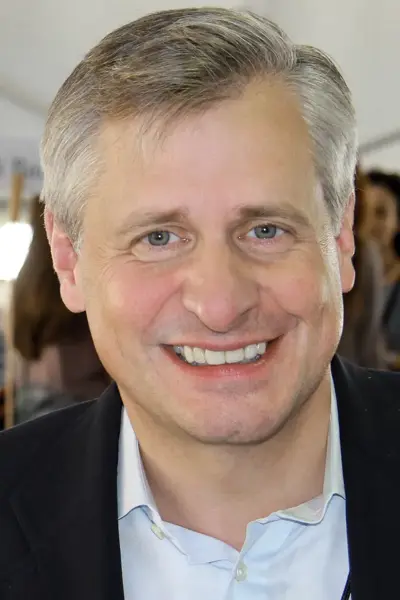
Jon Ellis Meacham is an American writer, reviewer, historian and presidential biographer. A former Executive Editor and Executive Vice President at Random House, he is a contributing writer to The New York Times Book Review, a contributing editor to Time magazine, and a former Editor-in-Chief of Newsweek. He is the author of several books. He won the 2009 Pulitzer Prize for Biography or Autobiography for American Lion: Andrew Jackson in the White House. He holds the Carolyn T. and Robert M. Rogers Endowed Chair in American Presidency at Vanderbilt University.
