Napoleon Bonaparte Quotes
In matters of government, justice means force as well as virtue.
Napoleon Bonaparte Bonaparte, 1769-1821, Military leader and Emperor of France, Maxims
Sourced by: Eigen's Political and Historical Quotations


The Lebanese Prime Minister had been assassinated with most Lebanese thinking that the Syrians were behind the murder. All the political parties in Lebanon called for a UN Tribunal to investigate the assassination. As the Tribunal was ending its investigation, word leaked out that the report would name Lebanese Hezbollah operatives as being involved in the assassination. If that happened, the Lebanese government and army would have the obligation to arrest the murders for trial and Lebanon would be split against Hezbollah which was the most powerful and militant political group as well as being a terrorist group. Hezbollah declared that they would not allow any arrests of their people, and that they wanted the Government, led by the murdered politicians son to repudiate the UN Tribunal even before the report was issued. When that failed, Hezbollah withdrew from the government coalition and reconstituted a government without the son of the murdered Prime Minister who was then thrown out of office. Jumblatt’s Druze party held the balance of power and surprisingly sided with Hezbollah. Usually he was a strong advocate for justice. However, if he refused to go along with Hezbollah, they would use their terror troops against the Lebanese army and civil war would result. Hence Jumblat’s answer—a classic statement of a political dilemma.


This is an amazing speech which illustrated the best of the development and growth of Islam. Note that: The ruler who has just been given ALL secular AND religious power admits candidly that he may not be the best qualified. This would not happen for over another 1000 years and even today is very rare in any society. In addition, he invites the citizens to correct him when he is wrong. Later, Calihs would, like the Christian kings and popes claim infallibiity and kill any who suggested otherwise. And daring to correct the ruler was capital offence for most of history and is even dangerous in some Muslim countries today. Last and perhaps most amazing, the new Caliph called for an affirmative leveling of the inequality of rights and power and announces it asa one of his major responsiblities. It is this kind of vision so unheard of at the time which shows us why so many flocked to Islam at the time. From a fairness, human rights, and accoutabiity of the ruler point of view Islam was the most modern of the religions then. Tragically, other forces shaped Islam for the next 1500 years and most Muslim countries become the least modern and its rulers are least accountable to the citizenry with none of the other rights and concept of fairness that Abu Bakr and other early Islamic leaders brought.


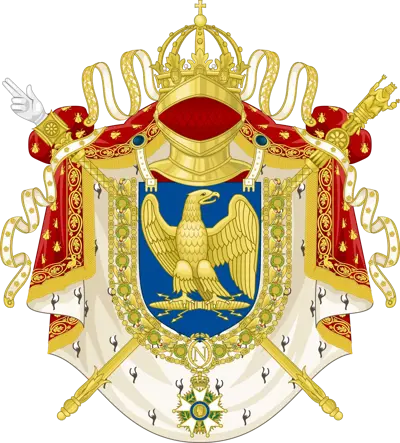
Napoléon Bonaparte was a French military and political leader of Corsican descent. He rose to prominence during the French Revolution and led several successful campaigns during the Revolutionary Wars. As Napoleon I, he was Emperor of the French from 1804 until 1814, and again in 1815. Napoleon dominated European and global affairs for more than a decade while leading France against a series of coalitions in the Napoleonic Wars. He won most of these wars and the vast majority of his battles, building a large empire that ruled over continental Europe before its final collapse in 1815. One of the greatest commanders in history, his wars and campaigns are studied at military schools worldwide. He remains one of the most celebrated and controversial political figures in human history.
