Matthew Hale Quotes
If our Constitution is destroyed, if our right to free speech is denied, then we have the right to use whatever means necessary to survive and advance our position.
Hale's "Church" was a White Supremicist violent, terrorist, organization. Hale himself was jailed for attemoting to assassinate a Federal Judge.
Matthew Hale, Leader, World Church of the Creator, Comment after Benjamin Smith, one ot the group's members went on a rampage shooting Asians, Blacks and Jews and killing two, Quoted in New York Times, July 7, 1999
Sourced by: Eigen's Political and Historical Quotations


Massachusetts rioters who had distressed Abigail Adams and others were pardoned for their crimes. Jefferson was responding to her concerns {592539} and providing her with the pardon news.


His strategy was to fill the jails of Birmingham, and asked the young people to help. The next days saw virtually all the Birmingham high school students our of school and in the streets protesting which was then against the un-Constitutional laws of Birmingham and Alabama. The students were arrested by the droves and the white authorities, believing that they were being firm against “radical lawbreakers”, fell into the trap, and became a travesty to most of the country and the rest of the world and the hundreds of jailed students beaten and assaulted raised the consciousness of whites as well as Blacks.


The veiled threat of violence and disruption was a tactic that did not work.

This quotation is used by the moderate Egyptians and other moderate Arab leaders as well as Israelis and other experts in combating Islamic Fundamentalism to illustrate the thinking process of the Muslim fundamentalist terrorist leader. They are more than willing to sacrifice those they lead (though rarely themselves) if they think that something is to be gained. But if there is nothing to be gained, their “moral” responsibility requires not “wasting” their followers’ lives. Therefore, the way these experts believe they should deal with the radicals is to face them with overwhelming force (a variant of the Powell Doctrine) and never concede anything or let them gain anything from violence. A single concession makes the terrorism, sacrifice and violence worthwhile, but if there is no gain, the leader has wasted the lives of his followers and is less likely to initiate another attack.

Referring to the riots in the Watts section of Los Angeles:
The two were in the Dublin suburbs when others seized the Dublin Post Office and began the Easter Uprising without their knowledge. They were desperate to get to Downtown Dublin and have a role in the activities and get arrested with the more militant leaders.


This speech is often referred to as the “Ballot or the Bullet” speech. It was the first time that Malcolm X used the “Ballot or the Bullet”. He was not the first African American to use the “Ballot or the Bullet” phrase. See {624102} for a use over 100 years ago. However, he was really arguing to allow Blacks to vote in the South where it was almost impossible at the time. There was no Voting Rights Act at that time and it was his actions that helped pass one shortly thereafter.

This phrase was also to be used over 100 years later by Malcolm X. See {624101} and {38291}.


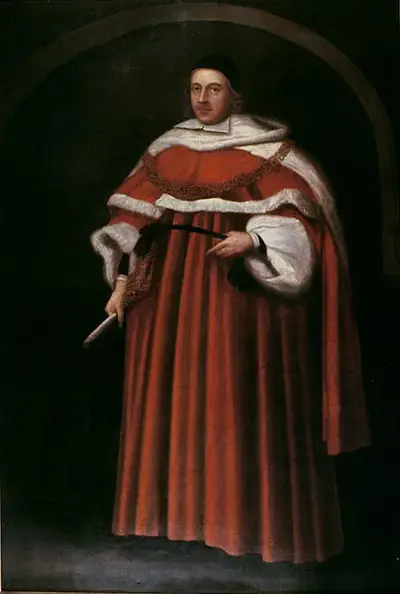
Sir Matthew Hale SL was an influential English barrister, judge and jurist most noted for his treatise Historia Placitorum Coronæ, or The History of the Pleas of the Crown. Born to a barrister and his wife, who had both died by the time he was 5, Hale was raised by his father's relative, a strict Puritan, and inherited his faith. In 1626 he matriculated at Magdalen Hall, Oxford (now Hertford College), intending to become a priest, but after a series of distractions was persuaded to become a barrister like his father thanks to an encounter with a Serjeant-at-Law in a dispute over his estate. On 8 November 1628 he joined Lincoln's Inn, where he was called to the Bar on 17 May 1636. As a barrister, Hale represented a variety of Royalist figures during the prelude and duration of the English Civil War, including Thomas Wentworth and William Laud; it has been hypothesised that Hale was to represent Charles I at his state trial, and conceived the defence Charles used. Despite the Royalist loss, Hale's reputation for integrity and his political neutrality saved him from any repercussions, and under the Commonwealth of England he was made Chairman of the Hale Commission, which investigated law reform. Following the Commission's dissolution, Oliver Cromwell made him a Justice of the Common Pleas.
