Ulysses S. Grant Quotes
I would suggest the taxation of all property equally, whether church or corporation, exempting only the last resting place of the dead and possibly, with proper restrictions, church edifices.
Grant, Ulysses S. "Seventh Annual Message." A Compilation of the Messages and Papers of the Presidents, compiled by James D. Richardson, Vol. 7, Bureau of National Literature and Art, 1898, p. 334.


The last tax reform before this quotation was made was in 1986. The iphone was not launched untanchin wasil 2007. There were actuallt some crude mobile phones available in 1986, but they were far from our concept of a cell thone today, None of these early attempts were successful economically or technologically.


Throughout most of the world, the rich and the aristocrats have been able to reduce or eliminate their tax obligations with the burden falling more heavily on the common people. Progressive taxation was thought to be a solution, but even in the United States by the 21st century many huge corporations paid little or no taxes while there was a heavy tax burden on small companies. Rich people generally paid a smaller percentage of their income than middle class people.


Under the American tax codes, religions and other nonprofit organizations have been exempt from paying taxes of all kinds. The “Bible Belt” is a region in the South where there are many churches and a very high percentage of religious people and especially Christian Fundamentalists.


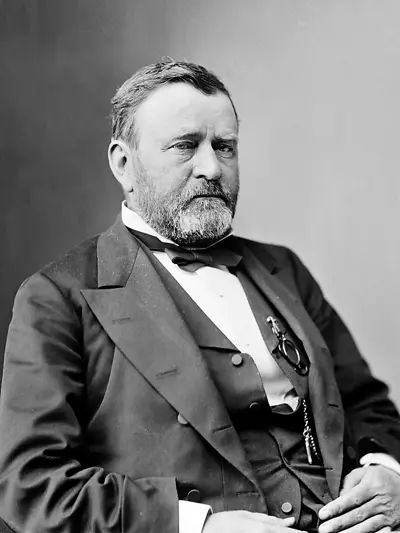
Ulysses S. Grant was an American military leader who served as the 18th president of the United States from 1869 to 1877. As president, Grant was an effective civil rights executive who created the Justice Department and worked with the Radical Republicans during Reconstruction to protect African Americans. As Commanding General, he led the Union Army to victory in the American Civil War in 1865 and thereafter briefly served as Secretary of War.
