James A. Garfield Quotes
The divorce between church and state should be absolute. It ought to be so absolute that no Church property anywhere, in any state, or in the nation, should be exempt from equal taxation; for if you exempt the property of any church organization, to that extent you impose a tax upon the whole community.
James A. Garfield, 1831-1881, 20th President of the United States (Republican, OH), Congressional Record, 2:5384, 1874
Sourced by: Eigen's Political and Historical Quotations


Religious organizations may become grantees or contractors to perform various social services—along with other non-profit organizations provided, that they do not comingle the government contract money with the general church funds, that the services that are provided are provided to all regardless of religious beliefs, and that there is no religious ceremony or indoctrination in the provision of services. Catholic Charities and the Salvation Army are two of the larger religious organizations that receive government funds for general service provision. Those religions who do not want Federal Auditors reviewing their use of the money or who insist that prayer is a necessary aspect of the social services are the ones who have trouble and accuse the government of being hostile to religious social services.


While this principle is very clear to us today, and was to the people who originally ratified The Constitution, there were many attempts by Christian groups to establish a privileged position for Christianity. For example, for years the Sunday Sabbath was legally enforced by unconstitutional Blue Laws that prohibited businesses from operating on the Christian Sabbath and prohibited activities that compete with Sunday church attendance. Supreme Court Justice Story even argued that the First Amendment allowed Christian religious supremacy and Cooley wrote this to refute Story’s now discredited doctrine.


The Senate was presented with James Madison’s Language for the First Amendment. These three alternatives were proposed and rejected. The rejected versions turn out to have been very important. Some have argued that the First Amendment does not prohibit Congress making laws regarding religion as long as it doesn’t favor one religion over another—for example pay for clerics of all religions. However, that was the third proposal and it was rejected in favor of the high wall of separation proposed by Madison.


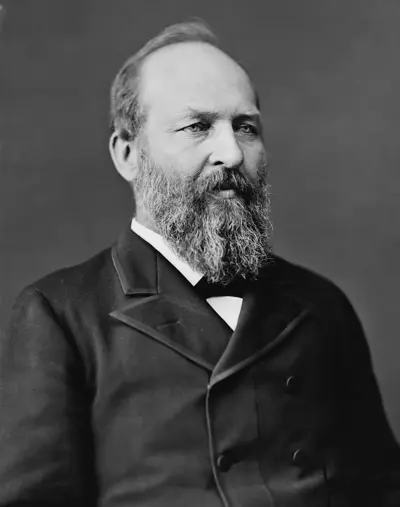
James Abram Garfield was the 20th president of the United States, serving from March to September 1881. Garfield was shot by an assassin four months into his presidency and died two months later. He is the only sitting member of the United States House of Representatives to be elected to the presidency.
