Malcolm Muggeridge Quotes
I doubt whether the Revolution has, in essentials, changed Russia at all. Reading Gogol, or Dostoevsky for that matter, one realizes how completely the Soviet regime has fallen back on to, and perhaps invigorated, the old Russia. Certainly there is much more of Gogol and Dostoievsky in the regime than there is of Marx.
Muggeridge, Malcolm. Chronicles of Wasted Time, Volume 1: The Green Stick. Collins, 1972.


The Russian domination of Communist parties throughout the world, was opposed very early. In many countries there were major struggles between the pro-Russian communists and the independent communists.


1st Earl Lloyd-George of Dwyfor. This turned out to be one of the worst predictions in political history.

America initially withheld recognition of the 1917 Russian revolutionary government and joined a number of other nations in stationing troops around Russia. The fear of Marxism was the beginning of the Red Scare in America. Ironically, in the early years after the Russian revolution, Russia had a relatively democratic government. The dictatorship of a few at the head of the Communist Party had not yet evolved. Ironically, when we did recognize Russia again it was after it had gone through a short lived democratic period, and was in the hands of a dictatorial few. America and many other nations valued stability and predictability more so than democracy. Hearst was one of the few American notables who saw the hypocrisy of this.

This quotation illustrates White’s favorable view of Russia. Note his use of the “it works” phrase which he picked up from Stefens’ famous quote {634892}. At the time the Soviet Union had been perceived by many economists to have been a great economic improvement over Czarist Russia. And over all, Russia which in 1917 was an economic basket case, had become one of the stronger states in Europe although the Russian people paid a horrendous price. Most historians agree that White passed classified information to the Russians. He was accused of being a Communist, but there was never any evidence of that. Some people believe that he was a spy for the Russians and committed espionage, but others disagree observing that White was very much his own man and felt that much information that was classified never should have been. White substituted his own judgment, it is believed, about what could be given to the Russians for the security system. He was an admirer of what Russian socialism had accomplished economically, educationally and medically since the 1917 revolution deposing the Czar. Russia had been a valuable military ally, which had taken the brunt of both military and civilian casualties in WWII. White’s economics were certainly not Marxist but very much Keynesian. He was subpoenaed by the House Un-American Activities Committee where he was accused of being a Communist which he denied (see {634907}). He died of a heart attack 3 days later.

He served as a liaison with the Russian military officers after WWII. As a result he developed friendships with some who told him much about Stalin and the Communist party of the Soviet Union.

Vladimir Lenin. This is a very important historical quotations. It was made by Lenin soon after the 1917 Russian Revolution and surprisingly to most he declared that the exporting of the Communist Revolution was more important than the national interest of communist Russia. Many Western nations, including the U. S. sent troops to part of Russia on various pretexts and it appeared to many that the West was ganging up against Russian Communism and interfering with their internal affairs. However, in effect, the new Russian state, with the attitude expressed by this quotation, was declaring a type of revolutionary war on all the capitalist nations who saw this fledgling mess of a country as a potential threat. They were right.

The Romanovs were the family of the Russian Czars while the Hapsburgs were the family names of the Emperors of Austria. The Austrian Army Chief of Staff hated the Russians and was constantly urging war against Czarist Russia. The archduke, the heir to the Austrian throne, was constantly arguing against attacking Russia. When Franz Ferdinand was assassinated, it triggered WWI. He was no longer able to have a voice against war, and Austria and Russia were soon at war. At the end of WWI, the Austrian Empire—an ally of Germany was broken up and the Russian Revolution ended the Romanov dynasty. The Archduke was absolutely right.

On a much smaller and less damaging scale, there were some government American officials tried to intimidate, censor and if thosoe failed, ruin and discredit scientiosts who did not agree with their view of the dangers of nuclear weapons and the various policy options. Although they drove Oppenheimer and some other scientists out of government and to this day have produced scientists who will not work on government research, the laws, Constitution and checks and galances and cmittment to the Constitution be most Americcans limited the damage somewhat and unlike Russia who assassianted scientists who did not follow the Party line, the few American officials just asassinated their character and patriotism.


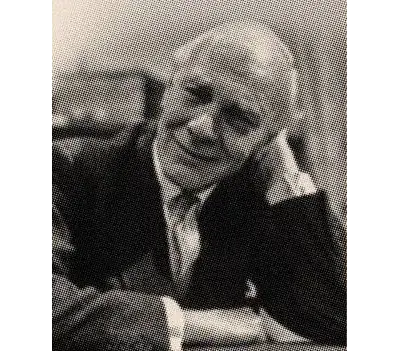
Thomas Malcolm Muggeridge was an English journalist and satirist. His father, H. T. Muggeridge, was a prominent socialist politician and one of the early Labour Party Members of Parliament for Romford, in Essex. In his twenties, Muggeridge was attracted to communism and went to live in the Soviet Union in the 1930s, but the experience turned him into an anticommunist.
