Herman Gorter Quotes
The Executive in Moscow, the RUSSIAN leaders of a revolution that triumphed only through the help of millions of poor peasants, forces these their tactics on the proletariat of Western Europe, which stands and has to stand all alone. And in so doing annihilates the best trend in Western Europe! …. Through these your tactics on the Trade Union question you and the Moscow Executive have proved, to my mind, that UNLESS YOU ALTER THESE TACTICS, YOU CANNOT CONDUCT THE REVOLUTION IN WESTERN EUROPE
The Russian domination of Communist parties throughout the world, was opposed very early. In many countries there were major struggles between the pro-Russian communists and the independent communists.
Herman Gorter, 1864-1927, Dutch Philosopher & Reformer, Open Letter to Comrade Lenin, 1920
Sourced by: Eigen's Political and Historical Quotations


Although he was a Marxist, he was also a democrat. He was one of the first leftists to criticize the Russian Revolution. The letter was widely published. There were few left wing intellectuals who would take Lenin on at the time but Gorter was one.

Zetkin, a Russian Communist supporter, like most other left-wing intellectuals of the day realized that the post-revolutionary Bolshevik activity was brutal and undemocratic and did not approve. Yet most stayed with the Bolsheviks, initially because their previous life under the Czar had been so terrible, and later because dissent and opposition had become so personally dangerous.


Comintern was upset by the American Socialist Party because the party had rejected the 21 Conditions for Affiliation and withdrew their intent to join the Third International. To Comintern, the Socialist Party was a party of “bourgeois socialism.”

Commenting on political parties in Cuba:

Lev Davidovich Bronstein. Although Plekhanov was the intellectual giant of Russian communism, he died only two years into the revolution. He was never happy with some of the pragmatic compromises the younger firebrand communist leaders were making from their ideals. By the time he passed away, most, especially the younger, communist leaders like Stalin saw him as an old obstructionist and he was never celebrated as a hero by the communists. It was Trotsky and older leaders like Lenin who appreciated him. See {590463}.

This letter caused the Labor Government of Ramsay MacDonald to lose power to the Conservatives. The Conservatives claimed that the British labor movement was in cahoots with the Russian Communists to use British unions to promote Communism and spread propaganda. In 1924 many Laborites claimed that the letter was a forgery and had been planted by the Conservatives who had pulled other dirty tricks before to smear Labor. However, all the British newspapers ran copies of the letter and Labor lost the election. Historians almost all agree that the letter is a forgery because in other parts of the letter, talking about the Russian program, several errors were made describing the Communist program at the time. Gregory Zinoviev, a high ranking member of the Russian Cominterm, would almost certainly have not made these mistakes. Regardless of the fact that it is a forgery, to this day, it is still referred to as the “Zinoviev Letter,”

America initially withheld recognition of the 1917 Russian revolutionary government and joined a number of other nations in stationing troops around Russia. The fear of Marxism was the beginning of the Red Scare in America. Ironically, in the early years after the Russian revolution, Russia had a relatively democratic government. The dictatorship of a few at the head of the Communist Party had not yet evolved. Ironically, when we did recognize Russia again it was after it had gone through a short lived democratic period, and was in the hands of a dictatorial few. America and many other nations valued stability and predictability more so than democracy. Hearst was one of the few American notables who saw the hypocrisy of this.

So often in America, citizens and government officials have made alliances or joined organizations under the theory that “the enemy of my enemy must be my friend.” It has almost always been a mistake ranging from joining the Communist Party in the 1930s to supporting the dictators or the Middle East, Asia, and South America. In the 1930s Fascism was growing and already on the march and neither America nor England—the leading democracies were not doing anything to combat the threat. America was emerging from the Great Depression, had a string Isolationist movement, and a small but influential group of Fascists and Hitler enthusiasts. Also, no one outside of Russia knew about the Stalin atrocities.


Vladimir Lenin. See {640096} and {640094} for more on the Communist struggle with the Russian Peasants.
Vladimir Lenin. This is a very important historical quotations. It was made by Lenin soon after the 1917 Russian Revolution and surprisingly to most he declared that the exporting of the Communist Revolution was more important than the national interest of communist Russia. Many Western nations, including the U. S. sent troops to part of Russia on various pretexts and it appeared to many that the West was ganging up against Russian Communism and interfering with their internal affairs. However, in effect, the new Russian state, with the attitude expressed by this quotation, was declaring a type of revolutionary war on all the capitalist nations who saw this fledgling mess of a country as a potential threat. They were right.
Vladimir Lenin. While Lenin was of this view, Stalin and other hard liners disagreed. They not only imposed their brand of communism on their own people via force with terrible consequences for any dissidents, but the Soviet Army imposed Communism on most of the states of Eastern Europe, and those states in turn used their Armies and secret police to impose it on their own citizens.

This quotation illustrates White’s favorable view of Russia. Note his use of the “it works” phrase which he picked up from Stefens’ famous quote {634892}. At the time the Soviet Union had been perceived by many economists to have been a great economic improvement over Czarist Russia. And over all, Russia which in 1917 was an economic basket case, had become one of the stronger states in Europe although the Russian people paid a horrendous price. Most historians agree that White passed classified information to the Russians. He was accused of being a Communist, but there was never any evidence of that. Some people believe that he was a spy for the Russians and committed espionage, but others disagree observing that White was very much his own man and felt that much information that was classified never should have been. White substituted his own judgment, it is believed, about what could be given to the Russians for the security system. He was an admirer of what Russian socialism had accomplished economically, educationally and medically since the 1917 revolution deposing the Czar. Russia had been a valuable military ally, which had taken the brunt of both military and civilian casualties in WWII. White’s economics were certainly not Marxist but very much Keynesian. He was subpoenaed by the House Un-American Activities Committee where he was accused of being a Communist which he denied (see {634907}). He died of a heart attack 3 days later.

This is a very important historical, political quotation. The conservatives have since the Russian Revolution conflated socialism and communism. However, here in 1932 the leader of the American Socialist Party had already described the Communist Revolution in Russia as a failure of founding an acceptable modern state. Nonetheless, even into the 21st century many conservatives describe Thomas as a Communist. See {626692} for his distinction between Communism and Socialism. The difficulty of modern nation building was explained by Thomas and others but was really not accepted until the many attempts of the early 21st century, some supported by America like Iraq and Afghanistan and the Balkans and others like the “Arab Spring.” Then his early wisdom on this point became more appreciated.

Ataturk was not receptive toward Communism as some other world leaders were at the time. He saw its weakness far earlier than many others.

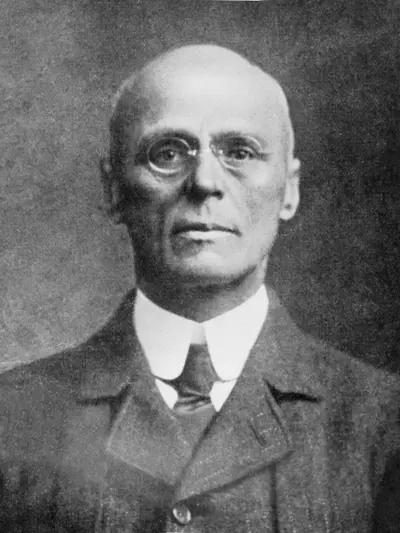
Herman Gorter was a Dutch poet and socialist. He was a leading member of the Tachtigers, a highly influential group of Dutch writers who worked together in Amsterdam in the 1880s, centered on De Nieuwe Gids (The New Guide).
