William Randolph Hearst Quotes
We recognized the imperial government of Russia, but when Russia secures a democratic government we have so far not recognized it.
America initially withheld recognition of the 1917 Russian revolutionary government and joined a number of other nations in stationing troops around Russia. The fear of Marxism was the beginning of the Red Scare in America. Ironically, in the early years after the Russian revolution, Russia had a relatively democratic government. The dictatorship of a few at the head of the Communist Party had not yet evolved. Ironically, when we did recognize Russia again it was after it had gone through a short lived democratic period, and was in the hands of a dictatorial few. America and many other nations valued stability and predictability more so than democracy. Hearst was one of the few American notables who saw the hypocrisy of this.
William Randolph Hearst, 1863-1951, U.S. Congressman (Democrat, NY), Founder, Independence League Party, Journalist and publisher, Telegram, 1918
Sourced by: Eigen's Political and Historical Quotations


Vladimir Lenin. While Lenin was of this view, Stalin and other hard liners disagreed. They not only imposed their brand of communism on their own people via force with terrible consequences for any dissidents, but the Soviet Army imposed Communism on most of the states of Eastern Europe, and those states in turn used their Armies and secret police to impose it on their own citizens.


Vladimir Lenin. This is a very important historical quotations. It was made by Lenin soon after the 1917 Russian Revolution and surprisingly to most he declared that the exporting of the Communist Revolution was more important than the national interest of communist Russia. Many Western nations, including the U. S. sent troops to part of Russia on various pretexts and it appeared to many that the West was ganging up against Russian Communism and interfering with their internal affairs. However, in effect, the new Russian state, with the attitude expressed by this quotation, was declaring a type of revolutionary war on all the capitalist nations who saw this fledgling mess of a country as a potential threat. They were right.


Lev Davidovich Bronstein. The Bolsheviks had all they could do to solidify their revolution and try and manage the basic needs of food and the economy. There was little thinking about foreign policy or Russia’s role in the world at this time.

This quotation illustrates White’s extreme naivety about Stalinist Russia. At the time the Soviet Union had been backing communist insurgencies blatantly in China, Greece, and Korea for example. Most historians agree that White passed classified information to the Russians. He was accused of being a Communist, but there was never any evidence of that. Some people believe that he was a spy for the Russians and committed espionage, but others disagree observing that White was very much his own man and felt that much information that was classified never should have been. White substituted his own judgment, it is believed, about what could be given to the Russians. He was an admirer of what Russian socialism had accomplished economically, educationally and medically since the 1917 revolution deposing the Czar. Russia had been a valuable military ally, which had taken the brunt of both military and civilian casualties in WWII. White’s economics were certainly not Marxist but very much Keynesian. He was subpoenaed by the House Un-American Activities Committee where he was accused of being a Communist which he denied (see {634907}). He died of a heart attack 3 days later.


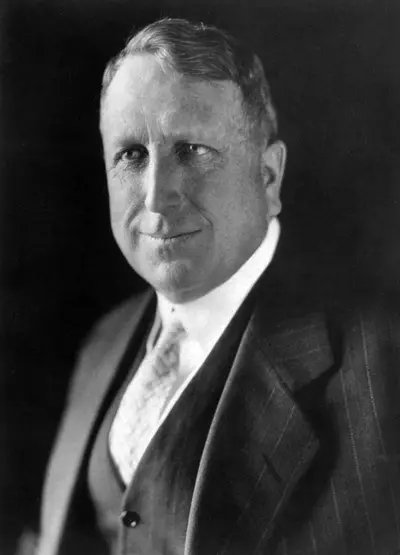
William Randolph Hearst Sr. was an American businessman, newspaper publisher, and politician known for developing the nation's largest newspaper chain and media company, Hearst Communications. His flamboyant methods of yellow journalism influenced the nation's popular media by emphasizing sensationalism and human interest stories. Hearst entered the publishing business in 1887 with Mitchell Trubitt after being given control of The San Francisco Examiner by his wealthy father, Senator George Hearst.
