Maximilien Robespierre Quotes
The aim of constitutional government is to preserve the Republic; that of revolutionary government is to lay its foundation.
Robespierre, Maximilien. Oeuvres de Maximilien Robespierre. Vol. 10, Presses Universitaires de France, 1967, p. 274.

Describing the concept of the House of Representatives:


Harding was arguing for party government. He may or may not have been right, but he was one of the weaker administers that held the American presidency. In addition he was not a particularly hard worker, and was more than willing to share any burdens.

America initially withheld recognition of the 1917 Russian revolutionary government and joined a number of other nations in stationing troops around Russia. The fear of Marxism was the beginning of the Red Scare in America. Ironically, in the early years after the Russian revolution, Russia had a relatively democratic government. The dictatorship of a few at the head of the Communist Party had not yet evolved. Ironically, when we did recognize Russia again it was after it had gone through a short lived democratic period, and was in the hands of a dictatorial few. America and many other nations valued stability and predictability more so than democracy. Hearst was one of the few American notables who saw the hypocrisy of this.


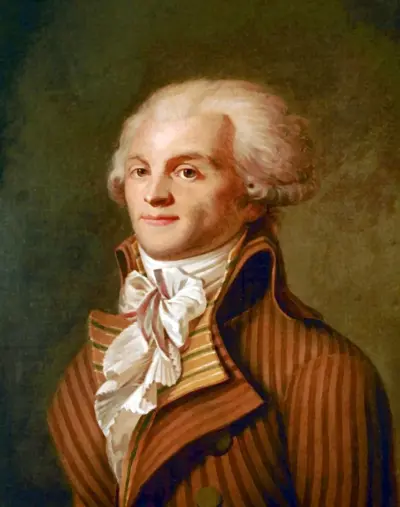
Maximilien François Marie Isidore de Robespierre was a French lawyer and statesman who was one of the best-known and most influential figures of the French Revolution. As a member of the Constituent Assembly and the Jacobin Club, he campaigned for universal manhood suffrage and the abolition both of celibacy for the clergy, and slavery. In 1791, Robespierre became an outspoken advocate for the citizens without a political voice, for their unrestricted admission to the National Guard, to public offices, and for the right to carry arms in self-defence. Robespierre played an important part in the agitation which brought about the fall of the French monarchy on 10 August 1792 and the summoning of a National Convention. His goal was to create a one and indivisible France, equality before the law, to abolish prerogatives and to defend the principles of direct democracy.
