Conrad Black Quotes
I don't go around trying to stir up foreign wars.
Black, Conrad. A Matter of Principle. McClelland & Stewart, 2011.


What makes this quotation important is that the Central Intelligence Agency disobeyed the order and implemented a number of covert operations in Indonesia and CIA Director Alan Dulles did not tell the President. See {634612} for his rationale.


This is a variant of a famous Clauswitz quotation {635143}.

President Polk and General Zachary Taylor will not He was the last President before Texas became a State. Most of us are surprised that the Texas President opposed the Mexican War.

Although Great Britain had abolished slavery, British economic interests during the Civil War suffered because of the northern blockade of the South. Much political opinion in England was hostile to the blockade policies of the Union. Bright, a great admirer and supporter of the United Sates and the Union cause was concerned that the United States might drift into War with Great Britain. His letter to Senator Sumner was written with the understanding that it would be in shared with President Lincoln, and it was actually read at a cabinet meeting.


There was some fear in the North that the shots fired by the Southern rebels, might encourage one or more of the European Powers to start a war with the United States. And if the Rebellion turned into a full scale Civil War, the South would surely encourage such acts be promising trade concessions in the export of Southern cotton. Seward’s confident and bellicose statement distressed some Union colleagues who feared that Seward might anger and provoke one of more of the machismo and nationalistic European Powers. However, if Seward was bluffing, the bluff worked. No country encroached on American interests during the Civil War. If he was not bluffing, he certainly, along with many others, understated the difficulty that the North would have putting down the Southern rebellion.

At the time of this speech virtually the entire world believed that. However world attitude changed markedly after the administration of George W. Bush and the United States invasion of Afghanistan after September 11 and the Iraq War which was for regime change.


Actually, the two world wars were wars of necessity. The Korean War and the Vietnam war are considered by many as wars of choice. But most of our military incursions—the Mexican War, the Spanish American War, Grenada, the Serbian War, Hati incursions and many others were wars of choice for which there were often very good reasons. However, we have to go to war when America is existentially threatened. In that sense, the Iraq War which Kerry was primarily addressing, could be interpreted either way. If it was really true thread. That is what caused most members of Congress to vote to approve the war. However, when that turned out to have been untrue, and it was suspected that the weapons of mass destruction was a deliberate ruse by some.


After the World War I armistice there were 7,000 American troops remaining in Russian Siberia to the chagrin of the Secretary of War who wanted them removed. One reason given for their presence was to "protect our relief efforts there:"


The Dutch Monarch William V, Prince of Orange, was in a very precarious position and might be deposed. Officially Harris and the British were supporting him and Harris was giving him money to firm up his regime, but their great fear was that the French would support and control the Patriot Revolutionary movement, then quite active or even intervene militarily to aid the Patriots.


A variant of this quotation was used by Admiral of the German Navy. See {609658}.
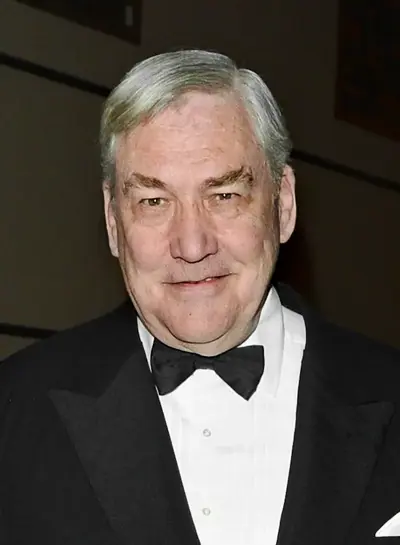
Conrad Moffat Black, Baron Black of Crossharbour, KCSG, is a Canadian-born British former newspaper publisher, convicted criminal, and writer. His father was businessman George Montegu Black II, who had significant holdings in Canadian manufacturing, retail and media businesses through part-ownership of the holding company Ravelston Corporation. In 1978, two years after their father's death, Conrad and his older brother Montegu took majority control of Ravelston. Over the next seven years, Conrad Black sold off most of their non-media holdings in order to focus on newspaper publishing. Black controlled Hollinger International, once the world's third-largest English-language newspaper empire, which published The Daily Telegraph (UK), Chicago Sun-Times (U.S.), The Jerusalem Post (Israel), National Post (Canada), and hundreds of community newspapers in North America, before controversy erupted over the sale of some of the company's assets.
