Henry Flynt Quotes
I began demonstrating against serious culture. In hindsight, the actual course of events has been very humiliating for me, because no one picked up on the intellectual critique I made.
Flynt, Henry. Interview by Kenneth Goldsmith. WFMU, 26 Feb. 2004.


She had returned from assignment in Rwanda and was running the Rwanda desk. See {599462} as an example of the tone at the time.

This quotation is used by the moderate Egyptians and other moderate Arab leaders as well as Israelis and other experts in combating Islamic Fundamentalism to illustrate the thinking process of the Muslim fundamentalist terrorist leader. They are more than willing to sacrifice those they lead (though rarely themselves) if they think that something is to be gained. But if there is nothing to be gained, their “moral” responsibility requires not “wasting” their followers’ lives. Therefore, the way these experts believe they should deal with the radicals is to face them with overwhelming force (a variant of the Powell Doctrine) and never concede anything or let them gain anything from violence. A single concession makes the terrorism, sacrifice and violence worthwhile, but if there is no gain, the leader has wasted the lives of his followers and is less likely to initiate another attack.


Seeger, a left winger, had been one of those entertainers who had been blacklisted by Hollywood as a result of the red scare and McCarthyism. However, Seeger found that he could give concerts almost anywhere and draw a paying crowd, and the John Birch Society, an ultra right wing organization was so offended by his left wing politics that they would condemn him in whatever city or university he was scheduled for. The resultant publicity guaranteed him a large crowd including many who opposed his views but were even more offended by the fascist John Birth Society.


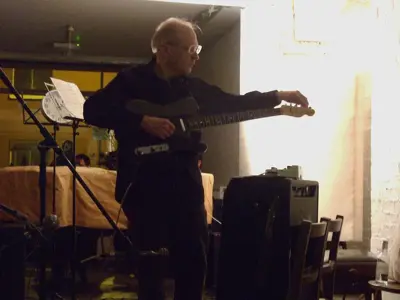
Henry Flynt (born 1940 in Greensboro, North Carolina) is an American philosopher, musician, writer, activist, and artist connected to the 1960s New York avant-garde. He coined the term "concept art" in the early 1960s, during which time he was associated with figures in the Fluxus scene. He later received attention for his anti-art demonstrations against New York cultural institutions in 1963 and 1964.
