Millard Fillmore Quotes
God knows I detest slavery but it is an existing evil, and we must endure it and give it such protection as is guaranteed by the Constitution.


He is often referred to as “of Lahore.” He was a much better theologian than a historian. His credit of Islam with the principles that would end slavery, ignored the fact that just as American founding fathers espoused equality and freedom yet some owned slaves, likewise Mohammed, the founder of Islam, was a slaveholder. Historically, long after most of the world had abolished slavery, it still existed in the Islamic nations. They were forced out of the African slave trade by the European powers in the 19th century. But slavery was legal in Saudi Arabia as late as the 1960s. Slavery was still practiced in Sudan in 2005 with Muslims attacking Christians and Animists and taking them as slaves despite the official laws banning such practices. The government itself aided the slavers. Also, although Islam is credited with a major assault on slavery, it was not slavery per se that Muhammad banned. It was the slavery of another Muslim. Sharia and the Koran allows slavery so long as the slave is an unbeliever.


Indian and Black slaves were outlawed very early in Connecticut, not on moral grounds of concern for the Indians and Blacks, but because of the negative effects on the white poor. Why would anyone pay the poor any more than the amortization costs of a slave? Therefore there was no way a poor white could make a living wage if slavery were to coexist.

Brown was the richest man in Rhode Island and made much of his money in the slave trade. This quotation shows that slavery was not completely a North verses South split. Northerners like Brown for whose family Brown University was named, was as virulent supporter of slavery as the most ardent Southerner.


Many historians of higher education to not agree with Wilder’s overall generality. However, it was certainly the case that slavery was a major factor in generating the funds for some early universities in the North, but others were “hotbeds” of abolition from their very inception.
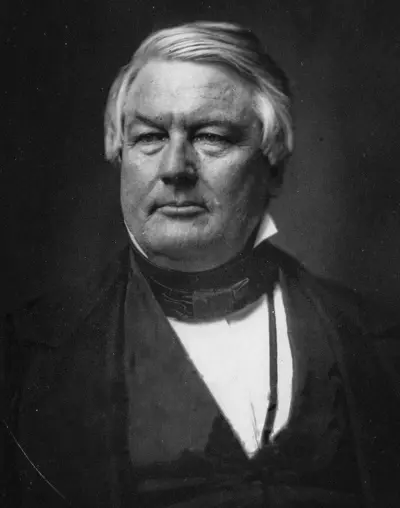
Millard Fillmore was the 13th president of the United States, serving from 1850 to 1853, the last to be a member of the Whig Party while in the White House. A former member of the U.S. House of Representatives from Upstate New York, Fillmore was elected as the 12th U.S. Vice President in 1848, and succeeded to the presidency in July 1850 upon the death of U.S. President Zachary Taylor. Fillmore was instrumental in the passing of the Compromise of 1850, a bargain that led to a brief truce in the battle over the expansion of slavery. He failed to win the Whig nomination for president in 1852 but gained the endorsement of the nativist Know Nothing Party four years later and finished third in the 1856 presidential election.
