Mexico Quotes
From and after the promulgation of the Constitution in the capital of each district, no one shall be born a slave in the state, and after six months the introduction of slaves under any pretext shall not be permitted.
See {613644} for the earlier decree which this modified.
Mexico, Law Governing Texas, March 11, 1827
Sourced by: Eigen's Political and Historical Quotations

This ordinance opened the door somewhat to slavery again as Austin said it would “permit families to bring the necessary and indispensable house servants and laborers.” Earlier Mexican laws had abolished slavery in most of Mexico but left the door open in Texas. See {613642} and {613644}.
This was a compromise. Most Mexicans wanted immediate emancipation of all slaves. However, Stephen Austin and others desirous of attracting colonists thought that this would inhibit too many American Southerners from immigrating to Texas. Slave enthusiasts wanted no prohibition on slavery. The Mexican Emperor issued this compromise but was soon thereafter overthrown. The law was then repealed by the revolutionary government and emancipation was immediate. However, Austin was able to persuade the junta to keep the law in place for Texas only, and so it was. A similar law was being debated by Congress but the Southerners were able to block it. There were still slaves and slavery in Texas. Four years later {613642} there were more restrictions on slavery.


The issue of slavery which had been suppressed in Congress for the first decades of the nation broke out when Missouri was considered for statehood. By previous agreement, slavery was not even discussed in Congress but the time period elapsed. Tallmadge not only proposed that no more slaves could come into Missouri but most shocking to the Southerners was that every person born in the new state would be free at the age of 25. In a generation, there would be no more slavery in Missouri and there would be no economic compensation for slave owners at all. The House of Representatives accepted the amendment, but it failed in the Senate. At that time, Senators were not elected by voters but were appointed by the state legislators and the Southern slave states had a disproportionate share of the senate from a population point of view. But what this quotation shows clearly that a majority of the country in 1819 were opposed to slavery and were willing to end it without compensation.

The Act was passed by the Pennsylvania General Assembly whose clerk interestingly enough was Tom Paine.

This quotation illustrates the strong abolitionist tendency in the Ohio Territory. Under this clause, escaped slaves from Southern states would not be returned by the state authorities. Even more insulting to the slave enthusiasts of the South, if a Southerner brought any slaves into Ohio with them as was common for Southerners traveling with their personal slaves or horse team drivers, those slaves would be free. An interesting aspect of this clause of the Ohio Constitution was that the beginning was, word for word, copied from the Northwest Ordinance of 1787. See {618100}.


See the Vermont Constitution for another variant of how slavery was abolished: {616994}


On February 11, 1790 American Quakers submitted a petition to immediately abolish the African slave trade from America. Southerners like Jackson argued that the Congress should not even “consider” such a petition or debate such as subject for if it did, that per se, would imply the possible consideration of emancipation, and if that were possible, they would be on the slippery slope toward emancipation of existing slaves which would be the end of the world as the Southern whites then knew it.

The Mystery was for many years the only Black Newspaper in America.


It, would automatically emancipate all children born to slaves thereafter. It did not pass. The quote is given as evidence of Jefferson’s attempts to eliminate slavery but is in marked contrast to the fact that he never freed his own slaves nor emancipated slave children (including possibly his own child with his slave Sally Hemmings). In addition, compare this with {629765} and {630991}.
Lincoln had promised amnesty to Southerners who would pledge loyalty to the Union. What many feared was that this would include slave owners re-enslaving their former "property," or that the government would allow them to do so in order to stop the rebellion.

Although some Arab nations such as Saudi Arabia maintained legal slavery into the 1960s, Tunisia’s Emancipation pre-dated that of the United States.


In June of 1850, a bipartisan group of Southern politicians met in Nashville, TN for the purpose of organizing strategy and tactics to ward off and defeat the growing aggressiveness of Northern politicians and other leaders in trying to abolish slavery. They issued an address to the people. This is one of the clearest statements of the position of most of the Southern Politicians on the increased efforts to abolish or curtail slavery. They felt that a deal had been made by the founding fathers and the first Congress not to deal with the slavery issue, and that deal must be honored in perpetuity. Most Northerners agreed that a deal had been made, but it was not binding forever—that a Congress could not limit the scope of a future Congress except via a Constitutional Amendment. The deal on Slavery was a deal not to address it for a while. It was not a deal to accept the Southern point of view. And none of it was written into the Constitution because opinion was even then split and a majority could not be mustered for a compromise that would write legal slavery into the Constitution. But many Southerners believed that its absence implied that it could not be addressed by the government. They demanded the right of their states to choose slavery if they so wished. Time was not on the side of the South and the Southerners who insisted on State’s Rights regarding slavery opposed States Rights for Northern States who wished to disallow fugitive slaves to be returned to owners. The more fugitive slaves there were, the more hypocritical the Southern position became as they needed Federal preemption on the issue of Fugitive Slaves, else slavery would end by escape and non-return of slaves.
In this quotation Lincoln got out of the rhetorical trap that Douglas had set for him by disclosing his personal preferences as opposed to the positions that Douglas had accused him of being pledged to. See {615827}.

The first anti-slavery newspaper published in the United States & the first journal in America to advocate immediate, unconditional emancipation
The Republicans had broken off from the Whig Party and started a new one attracting some liberal Democrats also. The Republican Party described themselves as “radicals” and argued for major reform quickly.

Washington was from Virginia, the largest of the slave states, and he himself owned slaves. In his will he emancipated all his slaves. Most of his fellow Southern Slave owners however not only disagreed about the abolition of slavery but were adamant that slavery spread so that the abolitionists never attain a majority.
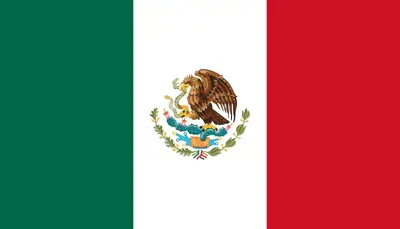
Mexico, officially the United Mexican States, is a country in the southern half of North America. It is bordered to the north by the United States; to the south and west by the Pacific Ocean; to the southeast by Guatemala, Belize, and the Caribbean Sea; and to the east by the Gulf of Mexico. Covering almost two million square kilometers (over 760,000 sq mi), Mexico is the sixth largest country in the Americas by total area and the 13th largest independent nation in the world. With an estimated population of over 120 million, it is the eleventh most populous country and the most populous Spanish-speaking country in the world while being the second most populous country in Latin America. Mexico is a federation comprising thirty-one states and a Federal District, its capital and largest city.
